
USDC’s Institutional Leap: How Bank Charters are Bridging TradFi and the Future of Digital Currency
July 10, 2026 18:33Backpack Launches 24/7 Tokenized US Equities on Solana: The Next Frontier of Real-World Assets (RWA) | MEXC Analysis
July 11, 2026 00:12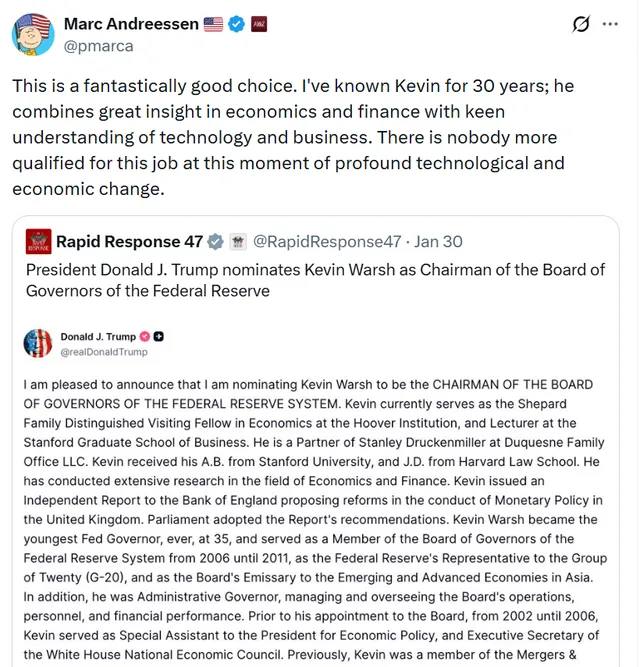
The AI Revolution Meets Central Banking: How Andreessen’s Role Signals a Paradigm Shift for Crypto
The intersection of Artificial Intelligence (AI) and global finance is no longer a futuristic concept—it is a critical, immediate reality shaping monetary policy. The recent appointment of Marc Andreessen, co-founder of Andreessen Horowitz (a16z), to co-lead a Federal Reserve task force studying AI’s impact on productivity, jobs, and monetary policy marks a monumental moment for the entire tech and finance sectors. This move signals that central banks are taking technological disruption—especially AI—with unprecedented seriousness.
The Significance of the Fed’s Focus on AI
Historically, when major global institutions like the Federal Reserve dedicate resources to studying a disruptive technology, it means that the potential impact is deemed systemic. Andreessen’s involvement adds another layer of weight: he represents deep venture capital expertise and an intimate understanding of how frontier technologies are built and scaled. The Fed’s goal isn’t just academic; they need to understand if AI will lead to massive productivity gains that justify lower interest rates, or if it will create structural labor market imbalances requiring new monetary tools.
For the crypto industry, this is a double-edged sword. On one hand, AI fuels the entire Web3 infrastructure—from advanced smart contract auditing to decentralized agent development. The need for secure, verifiable compute power and data storage makes blockchain technology an ideal foundational layer. On the other hand, if central banks begin integrating AI into traditional financial systems (TradFi) too quickly, it could pose a structural challenge to decentralized alternatives.
AI’s Impact on Crypto: A Structural Opportunity
The narrative surrounding AI and crypto is fundamentally about *compute* and *data*. AI models require colossal amounts of processing power, which drives demand for specialized hardware (like GPUs) and reliable energy sources. This massive capital flow into the underlying technology validates the foundational premise of decentralized networks. The need to secure data and execute complex computations in a trustless manner makes blockchain an increasingly vital utility.
Furthermore, AI is rapidly improving the security auditing process for smart contracts. Tools powered by advanced models can find vulnerabilities that human auditors might miss, making protocols safer and more scalable. This continuous improvement in security directly supports the narrative of structural risks to Bitcoin from private chains—it forces both sides (TradFi and DeFi) to raise their security standards.
Navigating the Macroeconomic Headwinds
The Fed’s focus on AI is part of a larger global trend where technology dictates economic policy. As we see increased geopolitical tensions, such as Germany’s defense spending boost signaling geopolitical risk, the search for reliable, non-sovereign assets intensifies. This environment of global uncertainty naturally increases the appeal of Bitcoin as a decentralized, borderless store of value.
For investors, this signals that macro analysis must now incorporate technological disruption alongside traditional factors like interest rates and inflation. The market is maturing from pure speculation to utility-driven adoption. To understand how long-term cycles play into these massive shifts, reviewing Bitcoin’s marathon consolidation phase provides crucial context for patience and strategic accumulation.
Conclusion: The Future is Decentralized Intelligence
The Fed’s move is a clear acknowledgment that AI represents the next great economic force. For crypto, this means the battleground is shifting from “if” blockchain will be used in finance to “how fast” it will be adopted and secured against both centralized and decentralized threats. The convergence of AI and Web3 promises unprecedented efficiency gains, but success hinges on maintaining decentralization and robust security.
To stay ahead of these massive shifts, continuous education is key. For a comprehensive view of how institutional capital views the market’s current state, check out The Crypto Market’s Green Zone Momentum.
🚀 Ready to Trade the Future?
The AI revolution and global financial shifts create massive opportunities for early adopters. Don’t let complexity slow your entry! Secure your trading edge by accessing top-tier tools on MEXC today:
*Disclaimer: This article is for informational purposes only and does not constitute financial advice.*