
Backpack Launches 24/7 Tokenized US Equities on Solana: The Next Frontier of Real-World Assets (RWA) | MEXC Analysis
July 11, 2026 00:12
The Contrarian Signal: Why Extreme Fear (FGI=23) is the Best Time to Accumulate Bitcoin
July 11, 2026 03:34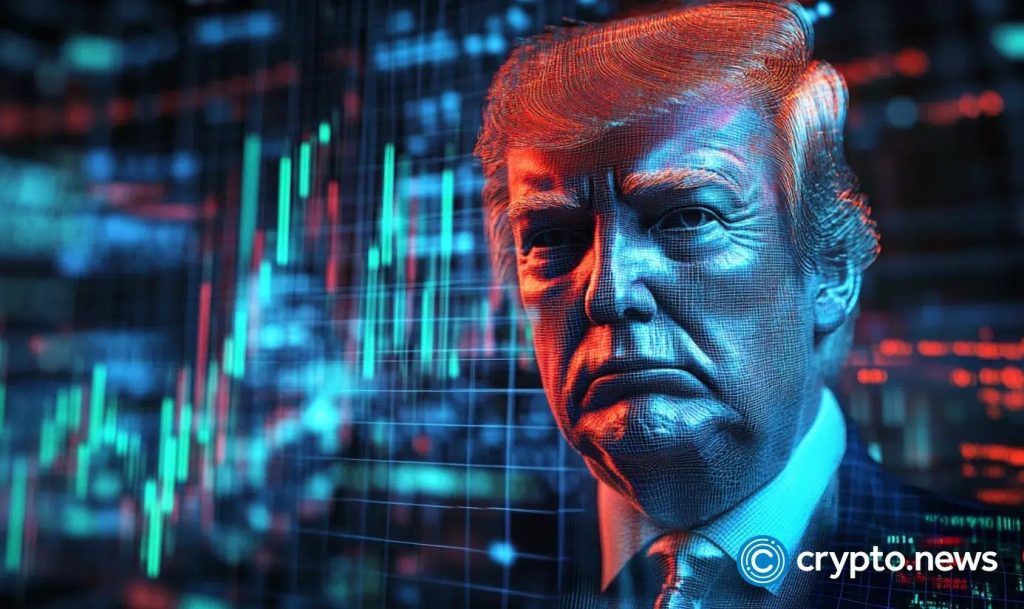
The Great Digital Race: How Geopolitics and Legislation Are Pushing Capital into Decentralized Assets
Recent political developments in the United States, specifically concerning a bipartisan housing bill that includes a ban on Central Bank Digital Currencies (CBDCs) through 2031, signal a profound shift in global financial governance. While former President Trump’s refusal to sign the bill adds political drama, the underlying legislative momentum is clear: there is growing institutional resistance against centralized digital currency control. This trend reinforces Bitcoin’s narrative as the ultimate non-sovereign, reliable safe haven—a crucial point for any investor monitoring macro trends.
🏛️ The CBDC Debate: Central Control vs. Decentralized Sovereignty
The core conflict revolves around who controls money in the future. On one side are central banks and governments exploring CBDCs—digital fiat currencies issued and controlled by a state. Proponents argue that CBDCs offer efficiency, instant settlement, and better integration with modern payment systems. However, critics, including many prominent figures in the crypto space, warn of unprecedented levels of surveillance and control.
A CBDC system, by its nature, allows the issuing authority to track every transaction, potentially linking financial activity directly to personal identity. This level of oversight is fundamentally incompatible with the core principles of self-sovereignty that decentralized finance (DeFi) was built upon. The legislative push to ban these systems until 2031, even if politically volatile, represents a powerful signal from institutional players who value privacy and autonomy.
🛡️ Bitcoin: The Ultimate Anti-Fragile Safe Haven
In this high-stakes environment of government overreach and financial centralization risk, Bitcoin (BTC) stands out. It is the most decentralized, permissionless, and censorship-resistant asset class available. Its value proposition is not tied to any single nation’s political whim or legislative cycle.
When geopolitical tensions rise—whether due to regional conflicts or domestic policy battles like the CBDC debate—capital naturally seeks assets that are inherently resistant to confiscation or arbitrary control. This flight-to-safety dynamic has cemented Bitcoin’s status as “digital gold.” For a deeper understanding of how market cycles and institutional money flow contribute to this resilience, review The Crypto Market’s Green Zone Momentum: Analyzing Institutional Flow and Web3 Maturity.
🌐 The Global Trend Towards Decentralization
This resistance to centralized control is not limited to the US. Globally, major technological breakthroughs are accelerating the move toward decentralized infrastructure. Consider the massive capital inflows into AI-driven tech like Anthropic data centers ($3.5 Billion for TeraWulf), or the utility demonstrated by protocols that allow real-world asset tokenization on Solana. These developments prove that innovation is moving faster than regulatory capture.
The market’s response to this structural tension has been clear: investors are increasingly favoring platforms and assets that guarantee autonomy. This trend of self-sovereignty is a major driver for the entire Web3 sector, making continuous security audits and robust protocols paramount. For those interested in how foundational technology like Ethereum is adapting to these pressures, Ethereum’s Inflection Point: Can ETH Break Free from its Downward Trend? provides excellent context.
💡 Strategic Takeaways for Traders
The current legislative climate suggests that the structural demand for decentralized, private value stores remains incredibly high. While political noise can be distracting, savvy investors focus on the underlying macro trend: a global shift away from state-controlled finance toward self-custody and permissionless rails.
To navigate this complex landscape, traders should:
- Prioritize BTC Exposure: Maintain a core allocation to Bitcoin due to its unmatched decentralization.
- Monitor Regulatory Shifts: Treat major legislative debates (like the CBDC ban) as confirmation of decentralized value, not just political talking points.
- Understand Risk: Be highly aware of speculative risks, such as those seen in the memecoin scam epidemic. Due diligence is non-negotiable.
For a comprehensive view on how Bitcoin’s market leadership dictates the performance of altcoins, read Bitcoin’s Marathon Consolidation: What the 307-Day Range Means for Future Breakouts.
📊 Live Market Data Snapshot (Source: MEXC)
- BTC/USDT Price: $63,853.5 USDT (Up 0.99% in 24h)
- ETH/USDT Price: $1,795.38 USDT (Up 2.7% in 24h)
The legislative push for decentralized finance is a powerful long-term tailwind. Stay informed and position yourself to capitalize on the shift toward true digital sovereignty.
**🚀 Ready to Trade with Confidence?**
Don’t let regulatory uncertainty dictate your financial future. Start building your portfolio on a reliable, global platform by trading on MEXC today: Trade Now at MEXC
Disclaimer: This article is for informational purposes only and does not constitute financial advice. Cryptocurrency investments are highly volatile. Always conduct your own research (DYOR) before making any investment decisions.