

Bitcoin Surges to $65,000: A Deep Dive into the Market Dynamics
July 23, 2026 12:50
Understanding Ethereum’s Current Market Position: Is There More to Come?
July 23, 2026 12:59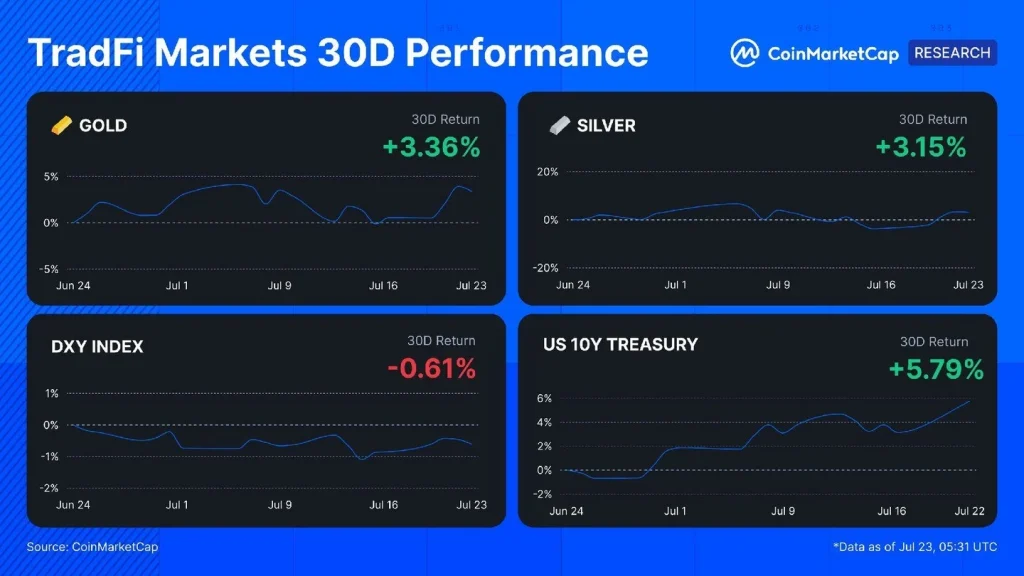
Analyzing the Current State of Long-Term Treasury Yields: Implications for the Market
Background and Context
The recent movement of long-term treasury yields has drawn significant attention. As of the latest reports, the yield on the 10-year Treasury note has climbed back to 4.66%. Meanwhile, the 30-year yield has remained above the 5% mark for an extended period, the longest since 2007. This shift in yields indicates a change in investor sentiment, particularly concerning inflation and growth expectations.
Historically, rising long-term yields often signal a shift in economic conditions. The last time the 10-year yield reached similar levels was in late 2007, just before the financial crisis unfolded. At that time, rising yields were accompanied by heightened inflationary concerns. A similar pattern is emerging now, raising questions about the sustainability of current economic growth.
Key Data and Metrics
The 10-year Treasury yield at 4.66% reflects a substantial increase of 35 basis points from earlier this year. In contrast, the 30-year yield has consistently stayed above 5% for several weeks, indicating a term premium that has not been observed in over a decade. This term premium is crucial as it compensates investors for the risks associated with longer maturities.
Furthermore, the inflation risk premium has increased alongside these yields. The current inflation rate stands at approximately 3.7%, with expectations of further adjustments in the Federal Reserve’s monetary policy. The last time inflation rates were at this level was in 2008, which had immediate implications for interest rates and overall market stability.
Market Analysis
The behavior of long-term treasury yields often correlates with equity market performance. Historically, equities tend to lag behind changes in bond yields. In this case, equities have started to react to the shifting yield landscape, with the S&P 500 Index recently experiencing fluctuations as investor sentiment adjusts to the new normal.
As yields rise, the cost of borrowing increases, which can lead to a slowdown in economic activity. This relationship suggests that higher yields may eventually weigh on corporate earnings, particularly for growth-oriented companies that rely heavily on debt financing. The current market capitalization of the S&P 500 is approximately $40 trillion, and shifts in yield could influence valuations significantly as the cost of capital increases.
Expert Perspective
Market analysts express a mix of caution and optimism in light of the current yield environment. Some experts argue that the sustained rise in long-term yields reflects stronger economic fundamentals, suggesting that the market is pricing in a robust growth outlook. However, others caution that persistent inflation risks could destabilize the current economic expansion.
In a recent analysis, economists noted that sustained yields above 5% could lead to a reevaluation of risk assets. Such a scenario was seen in 2013 during the “Taper Tantrum,” which resulted in a significant market correction. The current correlation between long-term yields and equity performance suggests a potential for increased volatility in the coming months.
Risks and Opportunities
Investors face several risks in this evolving landscape. The primary concern is the potential for a recession if rising yields lead to reduced consumer spending and corporate investment. The yield curve inversion, where short-term rates exceed long-term rates, has historically indicated an impending economic slowdown.
On the other hand, opportunities may arise for those looking to capitalize on the volatility. Traders can take advantage of short-term fluctuations in bond yields and equities, particularly as the market adjusts to new economic data. The recent surge in cumulative on-chain perpetual volume, which has surpassed $15 trillion, indicates that traders are actively seeking avenues for profit amid these changes.
Future Outlook
Looking ahead, the trajectory of long-term treasury yields will likely hinge on upcoming economic indicators, including employment data and consumer sentiment. The Federal Reserve’s response to inflation will also play a critical role in shaping market expectations. As discussed in our analysis of interest rates, the Fed’s decisions will significantly impact the bond market and investor behavior.
In the medium term, if inflation persists and yields continue to rise, we may see a reallocation of capital from equities to fixed income as investors seek safer havens. The last time the 30-year yield sustained above 5% was a signal for investors to reconsider their asset allocation strategies, which may repeat in the current climate.
Conclusion
The recent movements in long-term treasury yields reflect a complex interplay of inflation fears and economic growth expectations. With the 10-year yield climbing to 4.66% and the 30-year yield sustained above 5%, investors must navigate a shifting landscape where risks and opportunities coexist. Historical precedents suggest that current trends could lead to significant market adjustments, emphasizing the need for strategic positioning in investment portfolios.
To explore opportunities in this dynamic environment, consider leveraging platforms that offer insights and analytics tailored for market participants. For further information, visit MEXC.
Author: Martin Nolen