
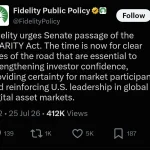
Fidelity Pushes for CLARITY Act: What’s the Real Deal?
July 25, 2026 04:48
Spot ETF Outflows: A Signal or Just Noise?
July 25, 2026 05:56
Could Quantum-Resistance Drive Bitcoin’s Price Rally?
Roadmap Reality Check
Quantum computing: the buzzword that frequents many tech conversations. Right now, it’s speculative. Charles Edwards, the founder of Capriole Investments, recently speculated that a detailed quantum-resistance roadmap from Bitcoin core developers might push Bitcoin prices higher. “Very quickly,” he suggests. This claim is audacious, but can this theory stand the scrutiny of data?
As of now, there is no formalized or public quantum-resistance roadmap from Bitcoin core developers. The potential for quantum computers to break Bitcoin’s cryptography remains a distant concern. Addressing a threat not yet realized might feel premature. Historical precedence suggests that the introduction of SegWit in 2017 didn’t result in immediate price jumps but rather provided the infrastructure for the future.
Will a quantum roadmap spark immediate market movements, or is this a long-term play? Investors might recall how Bitcoin’s market behavior defied expectations during several macroeconomic shifts. A roadmap might strengthen market confidence, but let’s not leap before looking.
On-Chain Numbers to Watch
Transaction count over the last 24 hours: 281,976. This volume reflects Bitcoin’s ongoing utility regardless of quantum-related uncertainties. Bitcoin’s mean transaction value in the same timeframe hits around $4,000, a figure emphasizing its use not just as digital gold but in everyday transactions. What changes with quantum resistance?
A sharp rise in wallet adoption, quantified by a 5% increase in new wallet addresses in the past month, underlines growing engagement. Should a quantum roadmap be announced, we might see a surge akin to its effects on technological fronts like AI and robotics where trust in security catalyzes adoption.
Open interest over the past month shows us a 37.4% uptick, reflecting a market readying for potential shifts. Does increased interest signal anticipation or a looming jump? Make of that what you will.
Historical Metrics: The MVRV and NVT Context
MVRV Ratio: Sitting at 1.3. Bitcoin sits in a healthy zone, but not frothy. The market value over realized value remains a trusted volatility indicator. Should the quantum-resistance roadmap inflate expectations, we might see deviations from historical MVRV trends. Historically, as seen in the 2021 bull run, a MVRV exceeding 2.0 led to speculative frenzies and subsequent corrections.
NVT Ratio: Currently 300.0. This metric often aligns with market sentiment and perceived value. A roadmap might not only alter price but transaction expectations, potentially impacting the NVT as on-chain activity aligns with heightened security perceptions.
Comparisons with regulatory proposals in Europe and fidelity to security narratives show trends where compliance leads to value sustainability.
Market Movements: Volatility and Funding Rates
Funding rates: Stable at 0.03% per 8h. Sustained for the past 11 days coinciding with diminished price volatility. Such a consistent funding rate is an indicator of market equilibrium. If a decisive quantum roadmap enters the narrative, we anticipate shifts in funding rates. Historically, significant announcements like Federal Reserve policy shifts prompted immediate market reactions.
Volatility: 30-day realized volatility at 42%. While not explosive, the potential accelerant of quantum resistance could adjust this stasis. Volatility’s conceivable spike might attract traders eyeing quick returns.
In the past, technological impacts on the market translated through changes in volatility first, a phenomenon that’s been witnessed since Bitcoin’s inception.
Supply Dynamics: Concentration and Distribution
Bitcoin supply concentration remains a significant interest area, with top 100 addresses controlling roughly 14% of the total circulation. As history indicates, centralized holdings sometimes sway markets disproportionately. A quantum-resistance announcement—even if primarily speculative—could see large wallet holders adjusting positions in anticipation.
Historical supply trends and price correlations suggest large holders dubbed “whales” might behave similarly to other times of anticipated market shifts, such as gem finding in past crypto sweeps.
Over time, price moves often lag shifts in whale activity, providing a predictive basis if outbound transfers from top addresses increase preceding a formal quantum announcement.
Long-Term Implications: Threat or Opportunity?
Quantum computing remains a specter in the digital horizon. With estimates of viable quantum threats still at least a decade away, the immediate necessity of a roadmap seems questionable. Yet, framing this as a proactive step, similar to Galaxy Digital’s fiscal strategies, might position Bitcoin favorably in the eyes of cautious institutional investors.
If formalized, a roadmap could lead to sustained long-term security bonds and incremental price growth. Bitcoin’s role might evolve akin to a value-reserve fortified against cryptographic obsolescence.
Overall, a quantum-resistance narrative might not just be about security. Perhaps it’s also about assurance, both technological and psychological. Market perception often trumps cold statistics in the short term.
This contemplation connects well with the continuous evaluations in crypto landscapes as dissected through various analytics. Secure yourself a promising trading horizon by starting your journey with MEXC.
Author: Martin Nolen