

The Structural Implications of Trade Tariffs: How Geopolitical Fragmentation Accelerates the Need for Digital Financial Plumbing
August 23, 2026 15:29
The Structural Pressure of Global Debt Overhang and the Mandate for Financial Plumbing Upgrade by 2026
September 3, 2026 10:47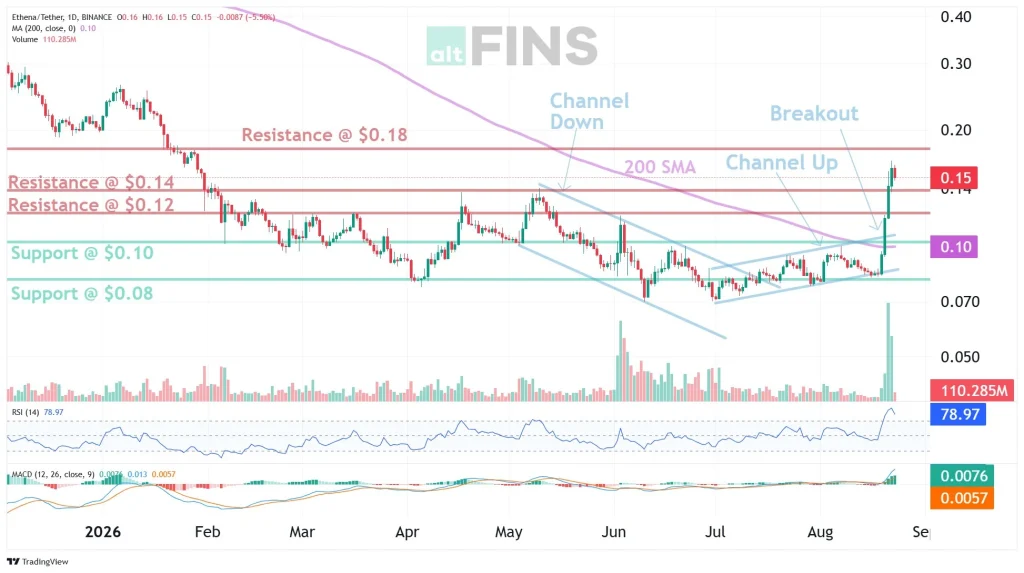
What is Ethena (ENA) and Why Does It Matter?
Think of a stablecoin like a digital dollar bill. Its job is to hold its value steady, usually pegged 1:1 to the US Dollar. This stability makes it incredibly useful for commerce. But traditional stablecoins often rely on centralized reserves—meaning they are backed by physical assets held in bank accounts. Ethena changes this model entirely.
Ethena is a protocol that aims to create a synthetic dollar, or $USDe. Instead of holding physical cash, it generates the stability and value using sophisticated financial instruments like depositary receipts (synthetic collateral). This process involves complex, automated strategies designed to maintain the peg while generating yield for its holders. I know this sounds complicated. It isn’t. The core idea is simple: use smart contracts to create a stable digital asset that can generate real returns on its value, unlike older stablecoins which often just sit in reserve accounts.
The mistake most people make here is assuming that all stablecoins are created equal. Many protocols simply mirror existing fiat currency flows. Ethena’s approach represents an evolution of the entire financial plumbing. It aims to be a self-sustaining mechanism for value generation within the digital asset ecosystem. This capability—generating yield while maintaining stability—is what makes it fundamentally different from older stablecoin models and positions it as a key piece of infrastructure in the new global finance system.
Decoding ENA’s Technical Signals: Reading the Chart
When we look at any asset, whether it’s Bitcoin or Ethena, the technical charts tell a story about supply and demand. They are like reading the body language of the market itself. The recent activity around ENA provides several clear signals that seasoned traders watch closely.
According to the latest data, ENA has shown significant strength recently. It executed a bullish breakout above the critical $0.10 level and also broke above its 200-day Moving Average (MA). Breaking these levels is usually seen as confirmation of a major trend change. The 200-day MA acts like a long-term guide rail for the price; when an asset breaks above it, it suggests that the underlying value has fundamentally changed and increased over time.
However, technical analysis requires balance. While the breakout signals strong buying pressure, the current reading shows ENA is highly “overbought.” Overbought simply means the price has risen very quickly in a short period. Think of it this way: if you buy something that has gone up 50% in one week, the sellers might take a break and let the price cool off before another big push. The Relative Strength Index (RSI), which is currently above 80, confirms this overbought condition. It suggests that while momentum is high, the immediate buying pressure may be exhausted.
This leads to a classic trading scenario: the potential for a retracement. The technical setup suggests watching for a pullback toward the $0.10 support zone. For swing traders—who aim to capture medium-term moves rather than day-to-day swings—this area represents a much more favorable entry point. It offers a chance to buy at a better price, increasing the potential reward when the next upward move begins.
The Macro View: Why ENA is an Infrastructure Upgrade
To understand why Ethena’s technical movements matter, we must zoom out and look at the global financial picture. The price of any single token—even one as sophisticated as ENA—is ultimately dictated by the structural forces acting on the entire system.
The world’s plumbing is under immense stress. It was built for a different era—one defined by physical checks, slow interbank transfers, and localized capital flows. Today, the demands placed on that old infrastructure are simply too great. The pressure points are global debt levels and the exponential compute power required by Artificial Intelligence (AI).
The sheer volume of global debt is staggering. We are talking about trillions of dollars in obligations across every major economy. When you look at this scale, it becomes clear the system is operating near maximum capacity. This systemic strain requires constant, complex settlement across borders and asset classes—a task that old rails simply cannot handle with modern speed or volume.
This brings us to AI compute demand. The development of advanced AI models requires massive capital expenditure (CapEx). Hyperscalers are spending unprecedented amounts of money building the physical backbone of the next global economy. This infrastructure needs instant, reliable financing and settlement mechanisms that legacy banking systems cannot provide. Cross-border payments that used to take days must now happen in seconds.
This structural necessity is where Ethena’s utility shines. By creating a synthetic dollar ($USDe) that generates yield through complex financial strategies, it provides a stable, high-utility digital asset that can participate in global commerce without relying on slow, centralized banking intermediaries. This capability to generate value and maintain stability while facilitating instant cross-border settlement is what makes ENA an infrastructure upgrade, not just another token.
Navigating the Structural Mandate of Digital Assets
The structural mandate for digital assets is confirmed by observing how global capital flows and regulatory actions are adapting to this new reality. We see this playing out in multiple, unrelated sectors—from corporate finance to geopolitical trade talks.
Consider the complex financial maneuvers seen in large crypto treasury firms. When they use strategies like share ceilings or reverse splits, it signals that traditional finance is struggling to manage its own growth within old legal frameworks. This struggle with scale proves the mandatory need for digital rails by 2026. The inability of existing systems to contain massive, rapid growth is a clear signal of systemic strain.
Similarly, geopolitical friction adds immense risk. When major economies introduce tariffs or trade restrictions, they create sudden blockages in global supply chains. The sheer volume of goods affected requires a financial mechanism capable of near-instantaneous, verifiable settlement across multiple jurisdictions—something old banking rails were never designed to absorb efficiently. This structural pressure confirms the need for decentralized settlement layers.
The market is responding by prioritizing utility over speculation. We can see this in how stablecoins are moving into real-world business needs. They are becoming critical pieces of financial plumbing, making global payments faster and more reliable than old banking systems. For instance, tokenizing Real-World Assets (RWAs) onto a blockchain creates an instantly liquid asset class that bypasses slow, siloed traditional custodianship. This capability fundamentally changes the plumbing by making assets more fungible and immediately tradable on a global scale.
The market is not just reacting to price; it’s responding to *necessity*. The structural imperative for digital rails is undeniable. For a deeper understanding of how large capital movements quantify this shift, review The Structural Mandate: Analyzing Wintermute’s Capital Flows and the Global Financial Plumbing Upgrade in 2026.
What to Watch Next for the Swing Trader
For the swing trader, the goal is not to predict the next all-time high. The goal is to identify structural support and resistance zones that offer favorable risk/reward ratios based on macro trends.
The current technical setup—overbought conditions approaching $0.18 resistance with a potential pullback toward $0.10 support—is your immediate trading focus. This suggests patience is key. Waiting for the price to pull back allows you to enter at a level that has historically shown strong demand, while still being within the context of the major bullish breakout above the 200-day MA.
Remember, every trade decision must be filtered through the lens of structural utility. Is this asset solving a real-world problem? Does it facilitate instant cross-border payments or manage massive capital flows? If the answer is no, then its short-term price action should be treated as high-risk speculation. The true value lies in protocols that are becoming mandatory infrastructure for global commerce.
For those interested in how network resilience is being tested by real user demand—a key indicator of utility—review The Solana Mini-Game Signal: A Stress Test for Digital Infrastructure. This shows how digital rails handle massive, sudden spikes in usage, a capability that is essential for the global economy of 2026 and beyond.
Author: Mark Montgomery, Digital Assets Educator