

The Structural Implications of Profitable Bitcoin Supply: A Macro Investor Perspective
September 3, 2026 14:22
BTC Surpasses $80K: A Quantitative Analysis of Liquidation Metrics and Structural Market Flow
September 3, 2026 15:13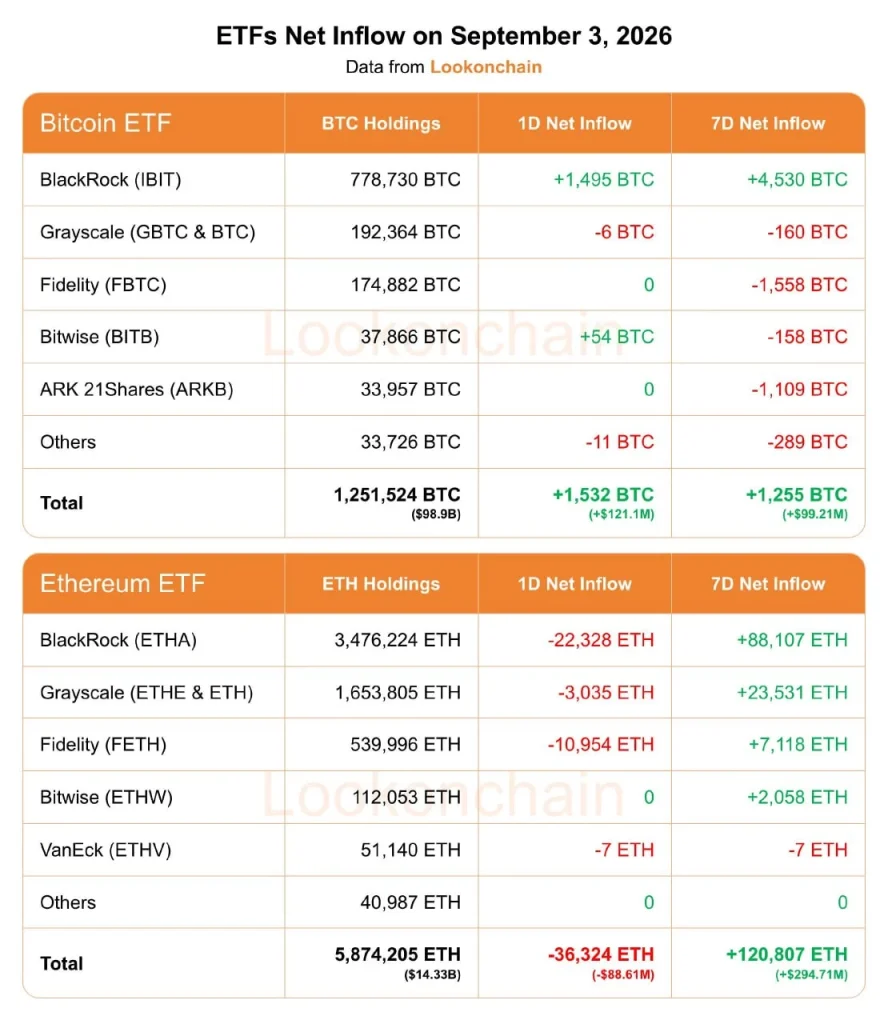
The Structural Mandate: Why Bitcoin ETF Flows and AI Compute Demands Are Forcing Finance to Upgrade by 2026
So this just happened, and honestly I have thoughts. 💭
You see all the headlines about money flowing into crypto ETFs. It’s huge, right? The numbers pop up daily—$121 million in one day for Bitcoin, or $294 million over a week for Ethereum. These flow reports are what get the attention, and they make it feel like the market is just riding a wave of easy cash.
But that cash flow story? That’s only half the picture. The real signal I’ve been watching lately isn’t about how much money is moving into these funds right now. It’s about *why* the money is moving, and what it needs to do once it gets there. It’s all about infrastructure.
Nobody’s going to say it plainly, so I will: this affects you. This whole thing isn’t just a cycle of buying and selling based on daily headlines. It’s about the underlying plumbing of global finance finally getting its much-needed upgrade. And that upgrade is being forced by two massive structural pressures: the sheer weight of global debt and the exponential power needs of AI compute.
I’ve been watching these institutional flow patterns for a few weeks now, and my honest read is: it’s complicated, but also super clear if you look past the hype. The combination of over $300 trillion in global debt—a number that feels impossible to wrap your head around—and the insane electricity demands of training advanced AI models creates an unavoidable mandate for financial systems worldwide.
This mandate forces every major financial system to upgrade its core plumbing by 2026. Digital assets aren’t just a speculative bet; they are becoming the only solution fast enough, and reliable enough, for the job.
What Actually Happened with the ETF Flows?
Let’s look at the numbers that everyone is talking about right now. The recent reports from @lookonchain show some really interesting, and frankly, conflicting signals for Bitcoin and Ethereum ETFs.
For Bitcoin (BTC), the flows are looking pretty solid recently. We saw a 1-day net flow of +$121.1 million, and over 7 days, it was even stronger at +$99.21 million. Those green arrows mean money is coming in consistently. It suggests that big players see Bitcoin as a reliable place to park capital for the long haul.
Ethereum (ETH) flows are more mixed. On one hand, we saw a single-day net flow of -$88.61 million—that’s a red flag. But then, over 7 days, it rebounded strongly with a +$294.71 million net inflow. This back-and-forth is exactly what makes the market feel confusing to regular people.
(I know, I know.) It looks like one day they buy, and the next day they sell. But here’s where you have to stop thinking about it as a simple “buy or sell” game. You need to think of these flows as *capital positioning*.
When massive amounts of money flow into an ETF, it means institutional desks are allocating capital for a specific purpose. They aren’t just buying because they think the price will go up next week. They are buying because they see systemic utility in the underlying asset—the ability to hold value and participate in global commerce.
The fact that both BTC and ETH ETFs are attracting such massive, multi-million dollar flows confirms one thing: these assets have crossed a major psychological threshold. They are no longer niche crypto plays; they are being treated by traditional finance as core financial instruments. This structural acceptance is the most important takeaway from those flow numbers.
The Global Debt Problem: Why Old Pipes Are Too Slow
Let’s talk about debt first, because it’s the biggest structural weight on the planet right now. We are talking about a global overhang that is estimated to be over $300 trillion. That number is staggering. It makes you feel dizzy just reading it.
When I say “global debt,” I mean sovereign debt—the money governments owe to each other and to bondholders worldwide. This isn’t just the national debt of one country; it’s a complex, interconnected web of obligations spanning every major economy.
Think of this massive pile of debt like an enormous train full of financial obligations. This train needs constant, reliable fuel (liquidity) just to keep moving forward. The sheer weight of servicing these debts creates structural stress on the entire global financial system.
The old banking model was built for a much slower world. It assumed that money moved across continents in days, maybe even weeks. It relied on layers of correspondent banks and manual checks—a process that is slow by modern standards. This worked fine when capital pools were smaller and information transfer wasn’t instantaneous.
But now? Now we have AI. And AI is not slow. Training a single large language model (LLM) requires specialized hardware clusters. These assets need funding *immediately*. The funding cycle for AI infrastructure cannot tolerate delays measured in days or even hours.
If a research team needs $50 million worth of compute power and waits 72 hours for the wire transfer to clear through three different intermediary banks, they lose millions in opportunity cost. That delay is an operational failure point. It’s not just inconvenient; it’s financially crippling when you factor in global debt servicing requirements.
The structural necessity dictates long-term value regardless of market cycles. The system needs speed and certainty above all else. And that’s where the plumbing issue comes into play. Legacy systems are optimized for *process*, but the modern economy demands *velocity*. This is a fundamental mismatch, creating immense systemic risk.
AI Compute Demands: The Speed and Finality That Old Systems Can’t Match
The AI boom isn’t just a tech trend; it’s an industrial revolution that is fundamentally changing the required speed of money. This change is what makes the plumbing issue so critical.
When you look at how much capital is needed to build out AI infrastructure globally, the numbers are mind-boggling. Hyperscaler capital expenditure (Capex) could reach hundreds of billions of dollars annually by 2026 alone. This kind of spending requires financing that can move instantly across borders and settle without question.
The old banking rails were designed for a world where trust was built on physical presence, paper checks, and slow human verification. They are not equipped to handle the velocity of data required by AI models. An AI model doesn’t care if your payment clears in three days; it needs to know that when it sends a prompt or receives a dataset, the value exchange is final *now*.
This brings us back to the concept of **finality**. In traditional banking, there are multiple points where a transaction can fail or be delayed. There’s an intermediary bank here. There’s a clearing house there. Each point adds risk and time—what we call counterparty risk.
When global debt reaches the scale of $300 trillion, that level of systemic risk becomes unacceptable for any major financial player. You cannot manage such massive obligations if you can’t guarantee settlement in seconds. The operational cost of delay is astronomical.
Digital rails provide this certainty. They allow a transaction to be irreversible and settled instantly, eliminating the structural risk points inherent in old banking processes. This isn’t an optional feature; it’s a mandatory requirement dictated by the sheer weight of sovereign obligations and AI’s need for instant funding cycles.
For more context on how massive capital movements signal this structural change, take a read on The Structural Implications of Profitable Bitcoin Supply: A Macro Investor Perspective. It really helps put the scale of this infrastructure need into perspective.
What This Means for You: The Shift from Speculation to Infrastructure
Okay, so we’ve covered massive debt and AI speed requirements. But what does this mean for your wallet? It means you have to change how you think about crypto.
The biggest mistake people make is treating it like a speculative asset class. They look at daily price charts or wait for the next “moon shot” announcement. This approach completely misses the structural picture.
You need to start asking a different question: “What problem does this network solve that the old system can’t?”
If a project provides verifiable identity (using ZKPs) or offers high-speed settlement for massive capital flows, then it has structural utility. That utility gives it long-term value, regardless of short-term hype cycles. This is the key difference between speculation and foundational investment.
The institutional money flowing into staking mechanisms—like the unusual volume around JitoStaked SOL (JITOSOL)—is a perfect example. They aren’t buying tokens for quick gains. They are locking up their holdings because they believe in the network’s foundational utility. They are underwriting the stability of the digital rails themselves.
This structural necessity is what makes assets like Bitcoin and Ethereum so appealing to large, conservative institutions. These entities need a platform that can handle massive transaction counts—the kind required by advanced AI models or global debt servicing. The speed of transactions directly correlates with its ability to serve as the backbone for next-generation global commerce.
For a deep dive into how these infrastructure comparisons play out, check Abraxas Capital Accumulation and Shorting Signal: A Quant Analysis of Institutional ETH Flows. It helps show how big players are positioning themselves for structural value, not just price action.
The Final Takeaway: Focus on Utility, Not the Chart
If you’re approaching crypto from a purely speculative angle—like looking at daily price charts—you are missing the entire structural picture. And that’s okay! 😉
The key thing to grasp is this: The massive global debt overhang creates an unavoidable pressure cooker effect on finance. This weight of obligation demands settlement rails that can handle trillions in transactions with absolute certainty and speed.
This structural mandate means we have to view crypto as foundational middleware. It’s the digital equivalent of electricity, which powers everything else. The more reliable and necessary that power becomes for global commerce—whether it’s funding AI research or servicing national debts—the more valuable the infrastructure itself is.
The market has already priced in this structural imperative. Any analysis that ignores the combined force of massive debt and AI compute demand is structurally flawed. Don’t get distracted by the latest fund filing or the biggest daily pump. Look at the underlying infrastructure, because that’s where the real value—and the mandate—lies.
This shift in perspective is huge. It moves you from being a gambler to being an infrastructure investor. You are investing in the necessary components of the next global financial operating system. This mindset change is probably the most valuable thing you can do right now, and it will pay off when the structural upgrade finally hits critical mass.
Author: Caroline Weeks, Crypto Lifestyle Writer