

UK Government’s Review on AI-Enabled Fraud and Crypto Money Laundering: Implications for the Market
July 16, 2026 11:13
South Korea’s $1.45B Leverage Wipeout: Impact on Young Traders
July 16, 2026 11:20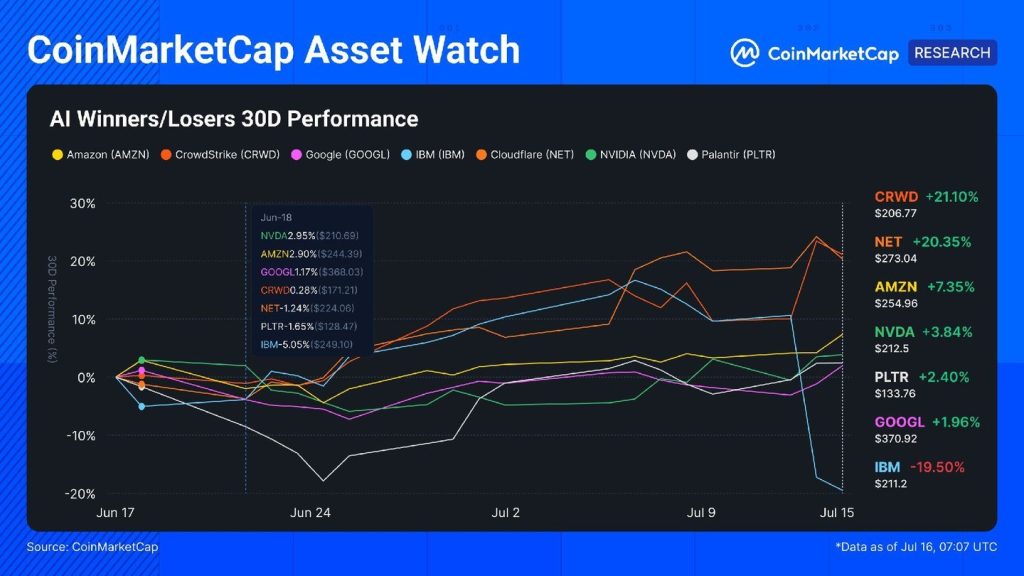
IBM’s 30.1% Plunge: Understanding the Implications for the Tech Sector
Background/Context
IBM’s recent announcement regarding a significant shift in enterprise spending has sent ripples through the tech industry, leading to a staggering 30.1% drop in its stock value this week. This decline raises important questions about the overall health of the tech sector and the changing priorities of enterprise budgets. Previously, many companies relied heavily on software and services from IBM, but the trend appears to be shifting towards investments in servers, storage, and memory solutions.
This shift in spending habits is noteworthy not only for IBM but also for the tech industry as a whole. As businesses become increasingly data-driven, the demand for efficient data storage and processing capabilities is on the rise. This trend could signal a larger transition within the tech sector that investors must pay attention to. Understanding the broader implications of this shift can help traders and investors make informed decisions moving forward.
Key Data/Metrics
In the wake of IBM’s announcement, several key metrics have emerged that provide insight into the current state of the tech market. IBM’s market capitalization now stands at approximately $112 billion, down from a peak of over $150 billion just a few months ago. This significant decline reflects not only investor sentiment but also the changing landscape of enterprise technology. Meanwhile, competitors like CRWD (CrowdStrike), NVDA (NVIDIA), and AMZN (Amazon) have managed to maintain stability amidst this turmoil, illustrating a potential divergence in market performance.
For instance, CrowdStrike reported a 30% year-over-year growth in revenue, while NVIDIA continues to see strong demand for its GPUs, which are crucial for AI and machine learning applications. In contrast, IBM’s revenue for the last quarter showed a decline, raising concerns about its long-term viability as a leader in the tech sector. These contrasting performances underscore the necessity for investors to critically analyze the tech landscape.
Market Analysis
The immediate market reaction to IBM’s news has been significant, with shares falling sharply and pulling down the broader tech index. Investors are now questioning whether IBM’s struggles are an isolated incident or indicative of a larger trend that could affect the entire sector. As highlighted in recent analyses, the tech sector’s performance is often interlinked, and downturns in major companies can trigger broader market sell-offs.
Moreover, the shift towards servers and memory solutions highlights an ongoing trend in technology investment. As companies pivot towards cloud computing and data analytics, the demand for robust infrastructure is increasing. This transition may create opportunities for companies that specialize in these areas, but it also poses risks for those heavily invested in traditional software and services.
Expert Perspective
Industry experts are weighing in on the implications of IBM’s warning. Some analysts suggest that this could be a wake-up call for investors, emphasizing the importance of diversification in their portfolios. “The tech sector is undergoing a transformation, and companies must adapt to survive,” says a leading analyst at a prominent investment firm. This sentiment is echoed by others who caution that IBM’s struggles may be just the tip of the iceberg.
Furthermore, the ongoing competition between tech giants means that companies must continuously innovate to retain market share. As highlighted in previous discussions, failure to pivot towards emerging trends can lead to significant declines in stock value.
Risks & Opportunities
As investors assess the fallout from IBM’s announcement, it is crucial to consider both the risks and opportunities that lie ahead. On one hand, the shift in enterprise spending could lead to reduced profitability for companies that do not adapt quickly. On the other hand, this transition presents opportunities for firms that can capitalize on the growing demand for data storage and processing.
For instance, companies that focus on cloud services and data analytics may see increased interest from investors looking to hedge against declines in traditional software firms. This shift could result in a reallocation of capital within the tech sector, favoring those who embrace innovation and adapt to the changing landscape.
Future Outlook
The future of the tech sector remains uncertain, particularly in light of IBM’s recent struggles. Investors are keeping a close eye on earnings reports from other tech companies to gauge whether IBM’s situation is unique or part of a broader trend. As companies continue to adapt to the changing demands of enterprise customers, the landscape will likely continue to evolve.
Looking ahead, businesses that can effectively leverage advancements in technology and data management will likely thrive. The trend towards increased spending on servers and memory solutions indicates a shift that could redefine the market dynamics in the coming years.
Conclusion
IBM’s 30.1% drop serves as a critical reminder of the volatility within the tech sector. As companies navigate changing enterprise budgets, investors must remain vigilant and adaptable. By understanding the implications of IBM’s warning and the broader trends at play, traders can position themselves to capitalize on emerging opportunities while mitigating risks.
In conclusion, the shifts in enterprise spending not only impact individual companies but also resonate throughout the entire tech landscape, making it essential for investors to stay informed and agile in their strategies.