

Ethereum’s Resurgence: How L2 Scaling and Utility are Rebuilding Web3 Confidence
July 13, 2026 17:46
The AI Arms Race: How Efficiency is Redefining Crypto Infrastructure
July 14, 2026 03:16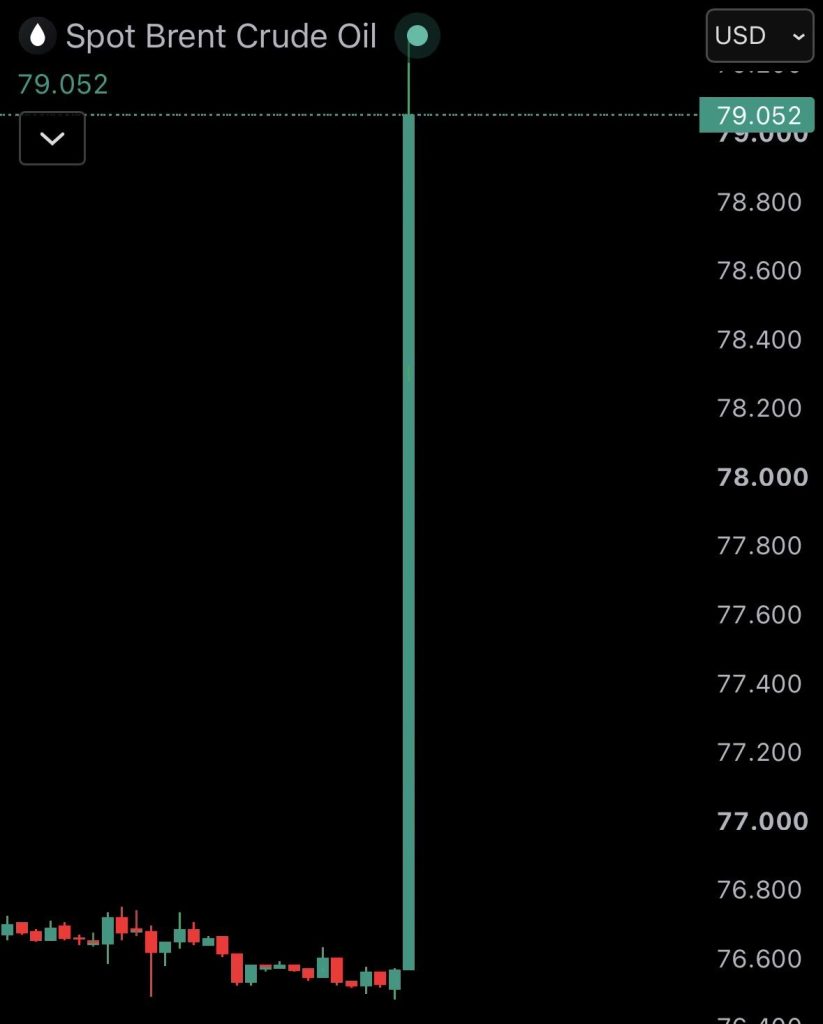
The Geopolitical Crucible: Oil Surges as US and Iran Resume Tensions
The global financial markets are reacting with immediate volatility to escalating tensions between the United States and Iran. Reports indicate that Brent crude oil has surged by a massive 4.5% at the open, signaling a rapid repricing of geopolitical risk across all commodity sectors.
⛽️ The Immediate Crisis: Oil as a Barometer for Global Stability
The dramatic spike in oil prices is not merely an energy market fluctuation; it is a textbook indicator of systemic global instability. When major chokepoints like the Strait of Hormuz become flashpoints, or when military rhetoric escalates between nuclear powers, the cost of doing business—the price of energy—skyrockets. This immediate increase in operational costs ripples through every industry, from manufacturing to transportation, creating a powerful inflationary pressure that affects consumer goods and corporate balance sheets worldwide.
This kind of geopolitical shock is precisely what decentralized assets were designed to hedge against. When the stability of national currencies or global supply chains is threatened by state-level conflict, capital naturally flows toward non-sovereign, immutable value stores.
🛡️ Why Geopolitical Risk Drives Capital to Decentralization
The recent flare-up between the US and Iran serves as a powerful, real-time case study for the core thesis of Bitcoin: its role as the ultimate hedge against systemic risk. In traditional finance (TradFi), capital is subject to national borders, government sanctions, central bank policies, and geopolitical conflict. These vulnerabilities mean that fiat currencies and state-backed assets can be frozen, devalued, or rendered unusable by political forces.
Bitcoin, on the other hand, operates on a decentralized, permissionless global ledger. Its value is derived from its scarcity (21 million cap) and its resistance to any single point of failure—be it a government seizure, a banking collapse, or a conflict in a vital shipping lane.
This concept was powerfully illustrated by the recent analysis on The Geopolitical Crucible: How US-Iran Tensions Signal a Global Flight to Decentralized Assets, which detailed how physical chokepoints directly impact crypto’s appeal.
🌐 The Broader Implications for Web3 and Finance
This crisis isn’t just about oil; it’s about the future of global finance. When traditional systems falter under stress, alternative rails—like decentralized finance (DeFi)—become critically important. We are seeing this pattern play out across multiple fronts:
- Regulatory Convergence: Global regulators, like those in Thailand and elsewhere, are tightening AML/KYC rules on stablecoins and digital assets, forcing the industry to mature and build robust compliance layers. This increased scrutiny ultimately validates the asset class for institutional adoption.
- Infrastructure Shift: The focus is moving from pure speculation to foundational infrastructure. As seen with The AI Pivot: Why Bitcoin Miners Are Shifting from Mining to Data Center Infrastructure, the most valuable assets are those that provide utility and reliable power—the same principles that make BTC a resilient store of value.
- Global Capital Flows: Large institutional players, such as Japan’s massive pension funds, are actively seeking non-correlated assets outside traditional portfolios, validating the thesis that digital gold is a necessary component of modern wealth management. You can read more about this shift in The Great Capital Shift: How Japan’s $1.8T Pension Fund Signals the Mainstreaming of Alternative Assets.
📈 Market Data Snapshot (MEXC)
In times of high geopolitical risk, market volatility is expected. Keep a close eye on key metrics:
- BTC/USDT Price: 63426.49 USDT
- Change (24h): -1.02%
🔑 Conclusion: Decentralization as the Ultimate Hedge
The surge in oil prices due to US-Iran tensions is a stark, immediate reminder that global stability is fragile and subject to political whims. For investors, this serves as a powerful confirmation of Bitcoin’s unique value proposition: it is an asset whose value is determined by mathematics and consensus, not by the whim of any single government or commodity cartel.
To navigate these volatile times and capitalize on the shift toward decentralized assets, staying informed about global risk and having access to secure trading platforms is paramount. Start building your crypto portfolio with institutional-grade security today!
**🚀 Trade Securely on MEXC: https://promote.mexc.com/a/S4oTaLfq**
*Disclaimer: This article is for informational purposes only and does not constitute financial advice. Always conduct your own research (DYOR).*