

Coinbase Stock Takes a Hit as CLARITY Act Odds Diminish
July 22, 2026 18:06
Iran’s Oil Market Threat: A Bold Statement and Its Global Implications
July 22, 2026 18:22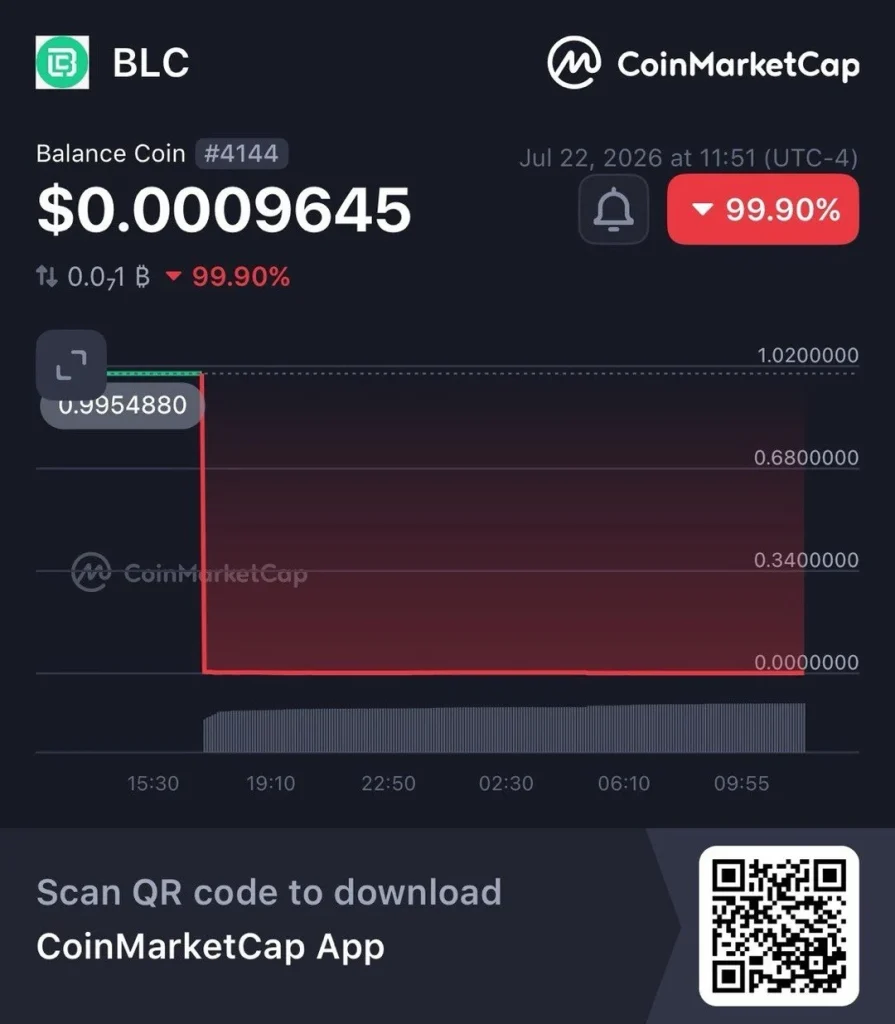
Algorithmic Stablecoin Balance Coin Crashes: An In-Depth Analysis
Background and Context
On October 24, 2023, the crypto community was rocked by the sudden collapse of the algorithmic stablecoin, Balance Coin, which plummeted by an astonishing 99.9% to a value of $0.0009645. This dramatic fall was triggered by a $915,000 exploit reported by PeckShield, a blockchain security firm, linked to the Decentralized Autonomous Organization (DAO) governing the Balance Protocol ecosystem. Algorithmic stablecoins, designed to maintain parity with fiat currencies through complex mechanisms rather than collateral, have been under scrutiny since the catastrophic collapse of Terra’s UST in mid-2022. Balance Coin’s downfall raises pertinent questions about the sustainability of such models, especially in light of recent vulnerabilities exposed in the DeFi space.
Balance Coin’s governance structure, which allows token holders to vote on critical protocol changes, is a common feature among decentralized projects. However, the exploit that led to this collapse underscores the risks associated with poorly audited smart contracts and governance protocols. The hack involved a manipulation of the DAO’s treasury or liquidity protocols, exposing the inherent vulnerabilities that can exist in decentralized systems. The implications of this crash resonate beyond just the token itself; they reflect broader systemic risks within the decentralized finance (DeFi) landscape.
Key Data and Metrics
Following the exploit, the market capitalization of Balance Coin shrank significantly. The token’s price, once pegged at $1, now languishes at a mere fraction of a cent. Trading volume also saw an unprecedented spike immediately following the news, as traders attempted to capitalize on the volatility. In the context of algorithmic stablecoins, this event is particularly alarming; UST’s collapse in 2022 was similarly preceded by a sudden loss of confidence leading to panic selling and, ultimately, a de-pegging event.
According to data from DeFiLlama, the total value locked in DeFi protocols has been on a downward trend, currently estimated at $50 billion, down from its all-time high of $180 billion in early 2022. This decline reflects a growing skepticism among investors regarding the robustness of DeFi projects, particularly those that rely heavily on algorithmic mechanisms. Balance Coin’s crash adds to the narrative that not all stablecoins are created equal, and the market appears to be recalibrating its expectations for these digital assets.
Market Analysis
The fallout from the Balance Coin collapse is likely to reverberate across the crypto markets, especially among other algorithmic stablecoins. Investors will likely scrutinize similar projects for vulnerabilities, leading to a potential liquidity crisis for those unable to demonstrate adequate security measures. Projects like Terra, which have faced scrutiny since their collapse, may see renewed interest from regulators as they seek to impose stricter guidelines on algorithmic stablecoins. The balance between innovation and regulatory oversight will be critical in shaping the future of this segment.
Furthermore, the incident may drive traders towards more established stablecoins, such as USDC or Tether (USDT), which have demonstrated resilience and a more traditional collateral-backed model. This shift could impact liquidity flows and trading pairs across various crypto exchanges. As discussed in our Coinbase Stock Takes a Hit as CLARITY Act Odds Diminish article, regulatory clarity is essential for fostering confidence in the market, and the Balance Coin incident serves as a stark reminder of the risks involved in DeFi.
Expert Perspectives
Experts in the cryptocurrency industry have voiced concerns regarding the sustainability of algorithmic stablecoins in light of Balance Coin’s crash. Ryan Selkis, founder of Messari, noted that “the failure of algorithmic stablecoins highlights the need for better risk management practices and more stringent audits.” He emphasized that projects must prioritize security over rapid deployment to avoid similar collapses in the future.
Moreover, analysts predict that the fallout from this incident could lead to a shakeout in the DeFi space, where only the most robust protocols will survive. This could, paradoxically, lead to a stronger market as weaker projects are weeded out, but it also raises concerns about investor confidence and potential regulatory backlash. As seen in the Institutional Trends and Market Dynamics report, institutional investors are increasingly wary of projects that do not adhere to rigorous standards, which could further complicate the landscape for algorithmic stablecoins.
Risks and Opportunities
The collapse of Balance Coin presents both risks and opportunities for traders and investors. On one hand, the immediate risk lies in the potential for broader market contagion, as investors may panic and sell off other similar assets. This could lead to a further decline in market capitalization across the board, impacting even well-established projects. Additionally, regulatory scrutiny could result in new compliance requirements that burden smaller projects unable to adapt quickly.
On the other hand, this incident creates an opportunity for innovation within the stablecoin sector. Projects that can demonstrate a robust and secure mechanism for maintaining their pegs may attract significant investment. For instance, overhauls in governance structures and smarter contract designs could lead to new standards in the industry. As mentioned in our U.S. Senate’s Proposed Ban analysis, the push for more transparency and security could pave the way for a more resilient crypto environment.
Future Outlook
Looking ahead, the future of algorithmic stablecoins remains uncertain. The Balance Coin incident has put a spotlight on the necessity for robust security protocols and governance structures. If projects can learn from this failure and implement more stringent measures, there may be a path forward for algorithmic models. However, this will require a delicate balance between innovation and compliance.
Moreover, as market dynamics evolve, the demand for stablecoins will likely remain strong, driven by their utility in trading and as a safe haven during periods of volatility. The success of future projects will depend on their ability to instill confidence among investors. As traders assess the fallout of the Balance Coin crash, they will be looking for signs of resilience in alternative stablecoins and a commitment to security and transparency.
Conclusion
The recent collapse of Balance Coin serves as a cautionary tale in the volatile world of cryptocurrency. As algorithmic stablecoins face increasing scrutiny, it is crucial for projects to prioritize security and governance. The lessons learned from this incident could shape the future of not only stablecoins but also the broader DeFi ecosystem. As the market recalibrates, traders and investors must remain vigilant, assessing the risks and opportunities that lie ahead. For those interested in diving deeper into the evolving landscape of cryptocurrency, visiting our Bitcoin Price Dips Analysis may provide valuable insights into market trends and investor sentiment.