
Google’s Strategic Investment in SpaceX: Analyzing the Implications
July 23, 2026 13:15
Exploring the Efficacy of Trading Bots: Insights from Weekly Results on Bitsgap
July 23, 2026 13:31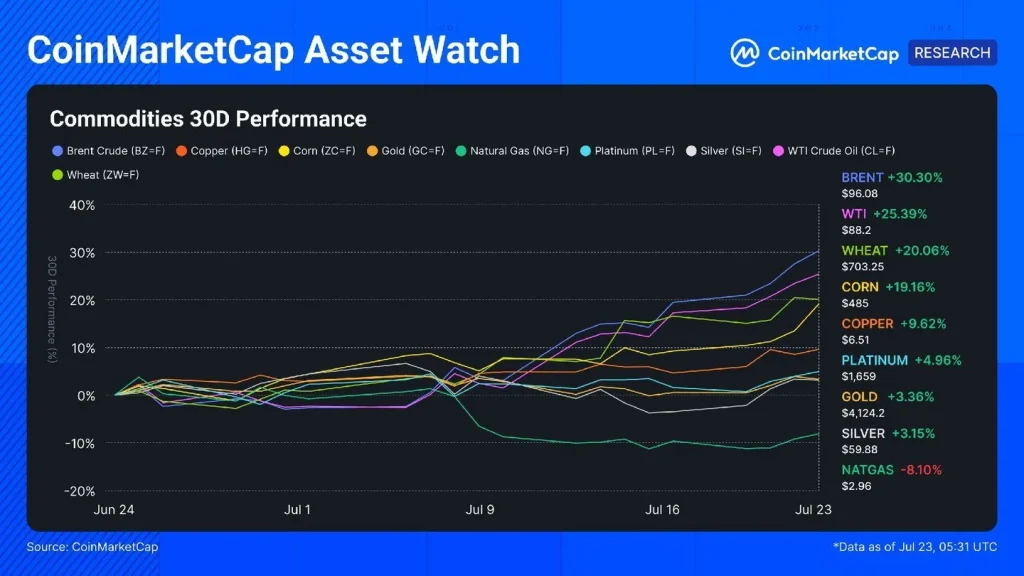
Market Reactions to Recent Crude Oil Disruptions: A Comprehensive Analysis
Background and Context
In recent days, the global oil market has been significantly impacted by reports of disruptions in the Strait of Hormuz, a crucial maritime chokepoint for crude oil transport. This development has sent prices soaring, with West Texas Intermediate (WTI) crude rising by 11.8% and Brent crude by 14.1%. The Strait of Hormuz is particularly vital, as it accounts for approximately 20% of the world’s oil trade, making any disruption a potential catalyst for price volatility.
Historically, tensions in the region have led to drastic fluctuations in oil prices. For example, during the U.S.-Iran tensions in 2019, similar disruptions resulted in significant price spikes. The current situation is reminiscent of those events, highlighting the ongoing geopolitical risks that continue to haunt the energy markets. As traders and investors, understanding these dynamics is crucial for navigating the complex landscape of oil trading.
Key Data and Metrics
As oil prices surged, other commodities also experienced upward momentum. Gold, silver, and copper joined the bullish trend, reflecting a broader risk-off sentiment in the market. The yield on the 10-year Treasury note fell to 4.66%, nearing the upper range of its 2026 predictions. Such movements suggest that investors are flocking to safe-haven assets, typically seen during times of uncertainty.
According to recent data, the price of WTI crude has now reached levels not seen since the early part of 2023, while Brent crude has similarly surged past critical resistance levels. For context, WTI’s rise to $80 per barrel and Brent’s jump to $85 per barrel mark a significant recovery from their lows earlier this year, when prices dipped below $70. These figures underscore the volatility that can arise from geopolitical tensions and market reactions.
Market Analysis: Implications for Traders
The recent surge in oil prices has immediate implications for traders and investors. For those engaged in futures trading, the spike presents both opportunities and risks. Traders who anticipated this rise may have capitalized on long positions, while those caught off guard might face significant losses. Understanding the timing of market movements is critical for making informed trading decisions.
Moreover, the rise in commodity prices often leads to inflationary pressures, which can have broader implications for financial markets. As energy prices impact the cost of goods and services, central banks may be compelled to adjust their monetary policies. For instance, if inflation continues to rise, the Federal Reserve may reconsider its current interest rate strategy, which could, in turn, affect equity markets. Monitoring these developments is vital for any trader looking to maintain an edge.
Expert Perspectives on Current Trends
Industry experts are weighing in on the current market dynamics, with many highlighting the potential long-term effects of the recent disruptions. Analysts suggest that if tensions in the Strait of Hormuz persist, we could see sustained high prices for crude oil, potentially exceeding $90 per barrel in the coming months. This sentiment aligns with previous forecasts that anticipated a volatile summer for oil markets.
Furthermore, the implications extend beyond oil prices alone. Investors must consider the interconnectedness of various asset classes. For instance, rising oil prices could lead to increased production costs for companies, which may ultimately squeeze profit margins in various sectors. Understanding these relationships is crucial for making informed investment decisions.
Risks and Opportunities Ahead
The current market environment presents a mix of risks and opportunities. On one hand, sustained geopolitical tensions could lead to continued volatility in oil prices, impacting not only energy markets but also broader financial markets. On the other hand, for savvy investors, this volatility can present buying opportunities, particularly in sectors sensitive to oil prices such as transportation and manufacturing.
However, it’s essential to acknowledge the risks involved. If the situation escalates, potential supply shortages could lead to even higher prices, which would adversely affect consumers and could trigger economic slowdowns. Investors should remain vigilant and consider strategies that allow for flexibility in the face of uncertainty, as discussed in our previous analysis of market trends.
Future Outlook: What Lies Ahead?
Looking ahead, the outlook for crude oil prices remains uncertain, with several factors at play. Should diplomatic efforts ease tensions in the region, we may see a stabilization of prices. Conversely, if disruptions continue or escalate, prices could surge even further, potentially leading to a reevaluation of global energy policies.
Investors and traders should also keep an eye on the broader economic indicators, particularly those related to inflation and interest rates. A rising yield environment could signal a shift in capital flows, affecting everything from equities to commodities. Therefore, maintaining a diversified portfolio is crucial in navigating these uncertain waters.
Conclusion: Key Takeaways
In summary, the recent disruptions in the Strait of Hormuz have reignited volatility in the crude oil market, leading to significant price increases for both WTI and Brent. As commodities like gold and silver also rise, traders must be prepared to adapt to changing market dynamics. The interplay between geopolitical tensions, inflationary pressures, and interest rates will continue to influence market behavior.
For traders and investors, understanding these trends and their implications is essential. Staying informed and adaptable in this rapidly evolving landscape will be key to seizing opportunities and mitigating risks. Explore opportunities on MEXC.
Author: Mark Montgomery