

MoneyGram CEO Anthony Soohoo Advocates for Seamless Blockchain Integration in Transactions
July 22, 2026 11:19
The Shift in Bitcoin Acquisition Strategy: Analyzing the Recent Market Dynamics
July 22, 2026 11:23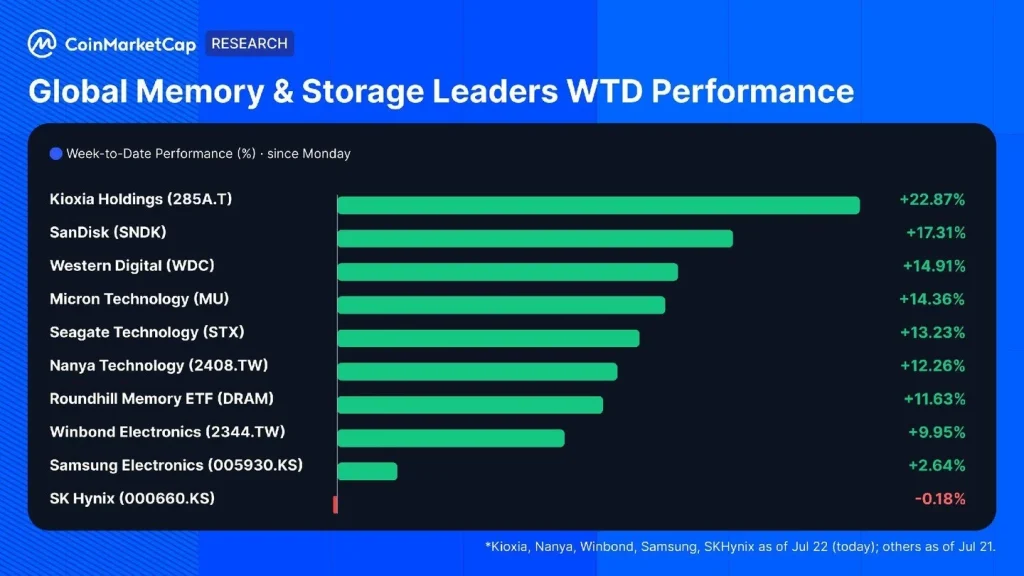
Memory Trade Reprices Fast: An In-depth Analysis of Market Movements
Background and Context
The memory market, particularly DRAM (Dynamic Random-Access Memory), plays a pivotal role in the semiconductor industry, which has been under intense scrutiny due to fluctuating demand and supply chain challenges. Tuesday saw a significant rebound in DRAM prices, marking its best performance in over a month. This surge can be attributed to various factors, including increased demand from tech giants and potential shifts in production strategies among memory manufacturers. As the demand for memory chips continues to rise, especially with advancements in AI technologies and cloud computing, the importance of understanding market dynamics becomes paramount for investors and stakeholders.
Despite the recent positive market movements, there are underlying challenges that have historically plagued the memory sector. The DRAM market has experienced cyclical fluctuations, often influenced by broader economic conditions and technological advancements. For instance, the rise of AI applications has led to increased memory consumption, creating a temporary spike in demand. However, this is juxtaposed with the challenges of overproduction, which can rapidly drive prices down. The interplay between supply and demand in the memory market is a crucial factor for traders and investors to consider.
Key Data and Metrics
Recent reports indicate that DRAM prices rose by approximately 5% on Tuesday, a significant uptick that has not been seen in over a month. This increase suggests a potential shift in market sentiment, likely driven by expectations of robust future demand. Furthermore, Asian memory manufacturers, which are heavily reliant on global tech companies, reported a similar positive trend, indicating a broader recovery in the memory sector.
Alphabet’s recent decision to raise its capital expenditures (CapEx) outlook for 2026 and highlight a sharp increase for 2027 has sent ripples through the semiconductor supply chain. Alphabet’s investments in AI and cloud infrastructure are expected to drive up demand for memory chips, which could further elevate DRAM prices. However, if Alphabet indicates a pause in its expansion plans, it could have a ripple effect on the broader AI and semiconductor trade, leading to potential declines in memory prices.
Market Analysis: The Broader Semiconductor Landscape
The semiconductor industry has been significantly impacted by geopolitical factors, supply chain disruptions, and changing consumer demands. The recent rebound in DRAM prices is a positive sign, but it must be viewed in the context of the broader semiconductor landscape. The industry has faced challenges such as chip shortages, which have resulted in increased prices across various sectors, including automotive and consumer electronics.
Market analysts are closely monitoring the memory trade as it is intrinsically linked to the overall health of the semiconductor sector. With companies like Samsung and SK Hynix leading the market, any fluctuations in their production levels or pricing strategies can have significant implications for DRAM prices. The historical context of the memory market shows that periods of price increases are often followed by corrections, making it essential for investors to remain vigilant.
Expert Perspectives on Memory Trade Movements
Industry experts have mixed opinions regarding the sustainability of the recent DRAM price increase. Some analysts believe that the current demand surge driven by AI projects and cloud services will continue to support higher prices. Conversely, others caution that any signs of reduced investment from major players like Alphabet could lead to a swift decline in prices, as seen in previous cycles.
For instance, Dave Hunter, a noted market analyst, has expressed concerns about a potential bearish sentiment developing in the market, reminiscent of previous downturns where rapid price increases were followed by significant corrections. His predictions underscore the importance of monitoring large tech companies’ investment strategies, as they often serve as bellwethers for the memory market.
Risks and Opportunities in the Memory Market
The memory sector presents both risks and opportunities for traders and investors. The current positive momentum in DRAM prices is encouraging, but the potential for volatility remains high. Risks include fluctuations in demand due to economic downturns, shifts in consumer preferences, and technological advancements that could outpace current memory solutions.
On the flip side, opportunities exist for investors looking to capitalize on the growth of AI and cloud computing. As these sectors expand, the demand for memory chips is expected to rise, potentially leading to sustained price increases. Companies that adapt quickly to changing market conditions and invest in innovative memory solutions could emerge as leaders in this space.
Future Outlook for the Memory Trade
Looking ahead, the memory trade is poised for significant developments. The anticipated growth in AI and cloud technologies will likely drive demand for DRAM and NAND flash memory, leading to a more favorable market environment for memory manufacturers. However, the market remains susceptible to external shocks, including changes in global trade policies and economic stability.
As we approach 2026, the focus will be on major players like Alphabet and their investment strategies. Any indications of a pullback in CapEx could signal a cooling off in the memory market, affecting DRAM prices and overall demand. Investors must stay informed and be ready to adjust their strategies based on these developments.
Conclusion: Navigating the Memory Market
The recent rebound in DRAM prices highlights the intricate dynamics of the memory market and its reliance on broader technological trends. Understanding these factors is crucial for traders and investors looking to navigate this volatile landscape. While the current trends present opportunities, the potential for rapid shifts underscores the need for vigilance and strategic planning.
In conclusion, the memory trade’s future is intertwined with the advancements in AI and the semiconductor industry as a whole. By staying informed and recognizing the signals from major players, investors can better position themselves to take advantage of the opportunities that arise in this ever-evolving market.
For more insights on the implications of memory market trends, refer to our analysis of blockchain integration, and explore institutional sentiment shifts that could impact technology investments.