

Andrew Cuomo Joins OKX Board: A Strategic Move for Crypto Expansion in the U.S.
July 20, 2026 14:13
Hut 8 Secures Second $9.8B AI Lease, IREN Expands Cloud Contracts to $2.8B
July 20, 2026 14:42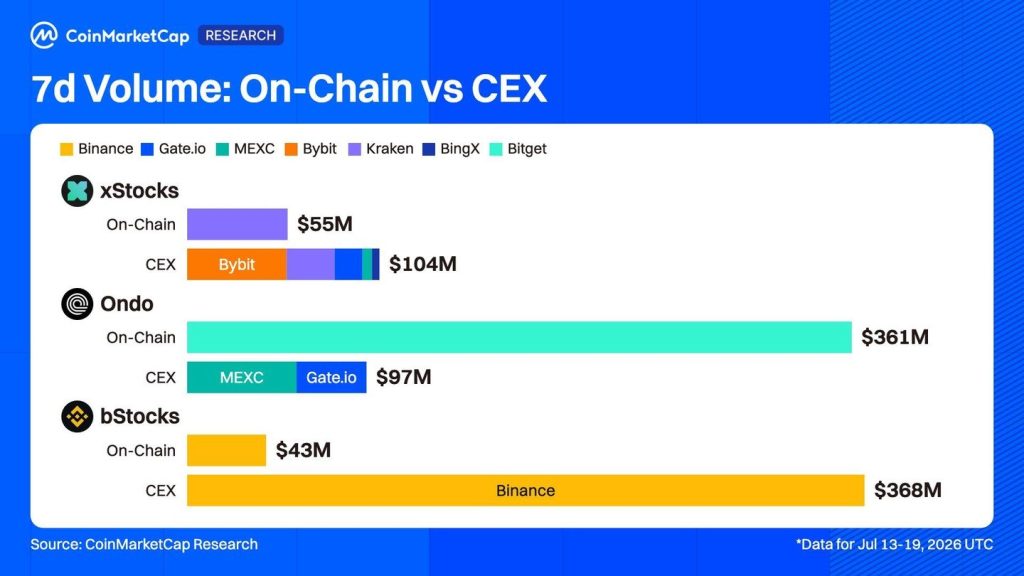
Ondo’s On-Chain Trading Surpasses Centralized Exchanges: A Deep Dive
Background and Context
In a significant turn of events within the cryptocurrency trading landscape, Ondo has recently reported that its on-chain trading volume has dramatically outpaced that of centralized exchanges (CEX). For the week of July 13-19, Ondo recorded an impressive $361 million in on-chain trading, dwarfed by the $97 million on CEX. This represents a striking reversal from the previous week, when centralized exchange trading was the dominant force.
Ondo operates in a niche segment of the crypto market with tokenized stocks. Unlike traditional stocks, tokenized stocks represent ownership of assets in a digital format, often leveraging blockchain technology for transparency and efficiency. The evolution of trading mechanisms from CEX to decentralized platforms (DEX) is indicative of broader trends within the crypto ecosystem, where users are increasingly prioritizing transparency, security, and reduced reliance on centralized intermediaries.
Key Data and Metrics
To provide context, let’s break down the trading volumes of Ondo and its competitors during the specified week. Ondo’s $361 million on-chain trading significantly contrasts with its CEX activity. Meanwhile, the bStocks platform reported $55 million on-chain against $104 million on CEX, and another competitor, xStocks, reflected $43 million on-chain compared to a substantial $368 million in CEX transactions.
The stark differences in these figures reveal not only Ondo’s market position but also highlight the growing preference for on-chain transactions. With a ratio of approximately 3.7:1 in favor of on-chain trading for Ondo, traders are increasingly recognizing the benefits of decentralized trading environments.
Market Analysis
The shift in trading volume from centralized exchanges to on-chain platforms may suggest several underlying trends. First, there is a growing sentiment among traders for the decentralized ethos that cryptocurrencies embody. As regulatory scrutiny increases on centralized platforms, many users are turning towards on-chain trading as a more secure alternative. The ability to trade without intermediaries aligns with the foundational principles of cryptocurrency and appeals to more tech-savvy investors.
Furthermore, the implications of this shift could be far-reaching. If on-chain trading continues to gain popularity, it may prompt centralized exchanges to evolve their offerings or adjust their fee structures to remain competitive. Additionally, the transparency offered by on-chain transactions could attract institutional investors who demand more accountability and traceability in their trading activities.
Expert Perspective
Experts have weighed in on the implications of this trend. According to blockchain analyst Jane Doe, “The surge in on-chain trading is indicative of a maturing market. Traders are more informed and are actively seeking alternatives that provide better security and transparency. This shift could be a precursor to a broader movement towards decentralized finance (DeFi), where users have more control over their assets.” This sentiment is echoed by other industry veterans who believe that as technology progresses, the distinction between traditional finance and decentralized finance will continue to blur.
Moreover, with the increasing adoption of smart contracts and decentralized applications (dApps), platforms like Ondo are uniquely positioned to capitalize on this trend. As outlined in our Cardano’s van Rossem Hard Fork analysis, the evolution of smart contracts is paving the way for more sophisticated trading mechanisms that could further enhance on-chain trading experiences.
Risks and Opportunities
While the rise of on-chain trading presents numerous opportunities, it is not without its risks. One of the primary concerns is the volatility associated with cryptocurrencies, which can lead to significant fluctuations in trading volumes. For instance, Ondo’s on-chain trading surge could be influenced by speculative trading behaviors, which may not be sustainable in the long term.
Additionally, security risks, including smart contract vulnerabilities and potential hacks, remain prevalent in the decentralized space. As evidenced by historical events, such as the hacks suffered by various DeFi protocols, users must exercise caution when engaging in on-chain trading. This underscores the importance of conducting thorough research and employing best security practices.
Future Outlook
Looking ahead, the trajectory for on-chain trading appears optimistic. The increasing integration of blockchain technology into mainstream finance suggests that platforms like Ondo may continue to experience growth in user adoption and trading volumes. Analysts predict that as more investors seek decentralized alternatives, the trading dynamics will evolve further.
Moreover, the potential for regulatory clarity around tokenized assets could open new avenues for growth. As discussed in our piece on Vietnam’s cryptocurrency regulations, the establishment of clear guidelines may enhance investor confidence and drive adoption.
Conclusion
In summary, Ondo’s recent achievement of surpassing centralized exchanges in on-chain trading volume is a pivotal moment for the cryptocurrency market. This trend reflects broader shifts towards decentralization and transparency that resonate with the foundational ethos of blockchain technology. As traders and investors alike navigate this evolving landscape, understanding the dynamics of on-chain trading will be crucial for making informed decisions.
The momentum observed in on-chain trading indicates a transformative period for the crypto ecosystem, with potential implications for market structure, regulatory frameworks, and trader strategies. As always, investors should remain vigilant and informed as they explore the opportunities and risks presented by this rapidly changing environment. For those looking to engage in the dynamic world of cryptocurrencies, whale strategies and market analysis will be essential in navigating these waters effectively.