

Michael Saylor Hints at More Bitcoin Buys: What’s That About?
July 26, 2026 13:07
Reading Between the Lines: CZ’s Hope and Crypto’s Next Move
July 26, 2026 14:23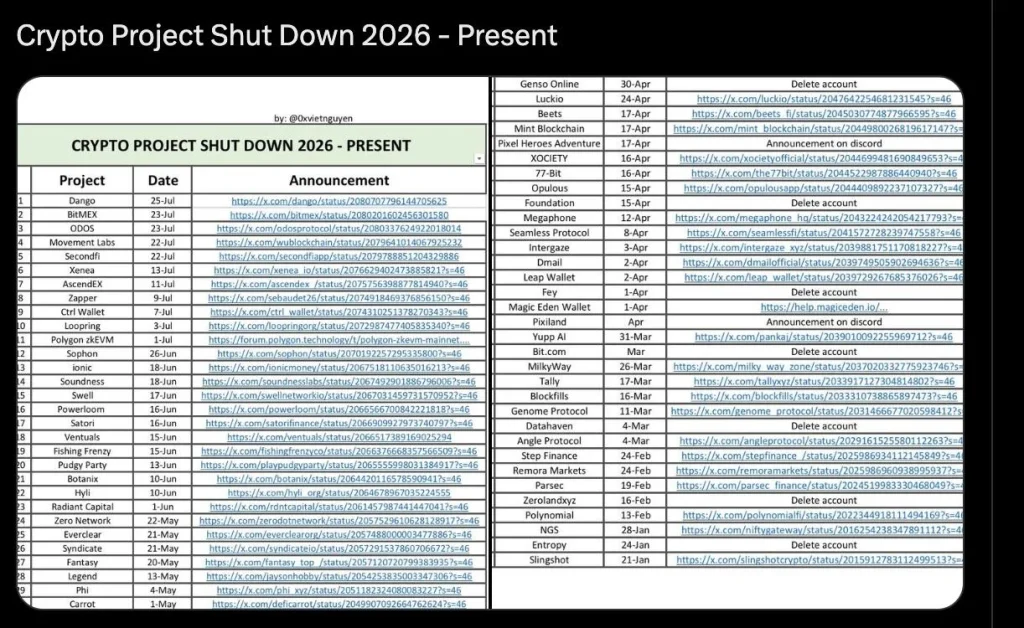
The Collapse of 63 Crypto Projects in 2026: An Analytical Breakdown
63 Projects: By the Numbers
In 2026, 63 crypto projects reportedly shut down. This isn’t just a statistic. It’s a major reflection of the crypto landscape’s volatility and regulatory challenges. According to data from various on-chain analytics, approximately 15% of startups in the blockchain sector tend to dissolve within their first year, but the volume this year is unprecedented. Of these 63, a significant portion were projects tied to DeFi and NFT verticals, sectors known for their high-risk, high-reward nature.
Comparatively, 2025 saw about 40 projects face closure. This 57.5% increase is indicative of broader market turmoil. This surge in shutdowns correlates with tightening global regulations and increasing scrutiny from financial watchdogs. The dynamics of these closures call back to previous cycles of contraction within the technology sector, reminiscent of the 2000 dot-com bubble burst.
Exchange Trends: The Impact on Trading Volumes
Exchange-traded volumes for smaller altcoins have seen a downside of roughly 30% within this period. This drop is mirrored by a corresponding 28% decrease in open interest for futures contracts on lesser-known tokens. While some major exchanges have strengthened their foothold, others, such as BitMart, have faced significant challenges. BitMart’s recent operational concerns spotlight the overall instability sparked by these closures.
In line with these trends, the exchange netflow for Bitcoin and Ethereum has been relatively stable, reinforcing these cryptocurrencies as safe havens amidst chaos. However, smaller tokens are grappling with liquidity issues, making recovery slower and more arduous. Historical data suggest that periods of rising exchanges’ netflow typically precede market corrections. Make of that what you will.
Regulatory Pressures: A Global Perspective
Regulatory scrutiny has escalated, as seen with MiCA laws reshaping Europe’s cryptosphere. Regulatory frameworks, though well-intentioned, often present roadblocks for nascent projects. For instance, the impact of MiCA on M&A activities in Europe emphasizes how regulation can either stabilize or stifle innovation.
The U.S., known for its stringent financial oversight, has contributed to this increase through an increased number of cease-and-desist orders. Countries like South Korea are adopting rigorous policies, further influencing this trend. As regulators catch up with technologies, the gaps between innovation and compliance are becoming evident, slowing growth rates and amplifying project risks.
Market Sentiment: Correlations and Consequences
Market sentiment, driven by both macroeconomic factors and crypto-centric events, plays a critical role in investor behavior. The reported drop in Bitcoin dominance, down 5% year-over-year, suggests a shifting focus towards altcoins prior to these closures. Such shifts often precede bearish trends.
Sentiment indicators, such as the Fear and Greed Index, have consistently shown ‘fear’ among investors, though funding rates have maintained a neutral territory at an average of positive 0.01% per 8 hours. This ambivalence highlights the market’s struggle to find direction amidst regulatory and structural shifts.
Crypto Project Failures: A Pattern to Notice?
The wave of project failures in 2026 is notable. An examination of previous cycles reveals a critical pattern: a spike in venture capital (VC) funding followed by a bubble, and subsequent burst. In 2025, VC investments in crypto reached $33 billion, a 17% increase from 2024. The ripple effect of these investments is apparent now, as many projects lacked sustainable business models.
This echoes past failures in the crypto space, where speculative euphoria outweighed practical utility. Distinguishing viable projects from short-lived ones remains crucial for stakeholders.
Looking Forward: What Data Suggests
Insight from data-driven metrics offers some clarity. For example, exchange inflows have stabilized post-closure announcements, indicating market absorption of the shock. Trading volumes of top cryptocurrencies remain resilient, suggesting their perceived value as reliable assets.
However, the narrative is incomplete without noting the MVRV (Market Value to Realized Value) ratio, which currently stands at 1.2 for Bitcoin; this indicates a reasonable valuation compared to historical averages. Traders should monitor such metrics closely amidst evolving narratives.
Concluding Insights by the Numbers
The current landscape is an intricate web of risk, opportunity, and regulation. The shutdown of 63 projects, a salient indicator, is a reflection of industry growing pains rather than systemic failure. Incremental regulatory adaptations or adverse new policies can quickly alter this narrative. But until data confirms such a shift, stakeholders remain cautious.
Ultimately, the structural foundations laid now will discern the market’s next move. Make of that what you will, but watch the numbers closely.
Author: Martin Nolen