
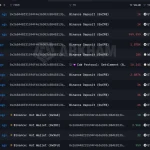
Whale 0x2684’s Profit Taking: Quantifying Structural Demand for Digital Settlement Rails in 2026
August 23, 2026 11:07
The Structural Imperative: How Institutional Capital Flows Signal a Necessary Upgrade of Global Financial Plumbing in 2026
August 23, 2026 12:07
The Structural Imperative: How Global Debt and AI Compute Demand Are Forcing Finance to Upgrade Its Plumbing
Think of the global financial system like a massive network of pipes. This plumbing was built over decades for a specific kind of flow—the movement of physical cash, checks, and bank transfers. It worked well enough when transactions were relatively slow and localized. But today’s economy is fundamentally different. We are dealing with two forces that have completely changed the required capacity of these pipes: massive global debt obligations and the exponential demand from Artificial Intelligence (AI) computing.
The mistake most people make here is assuming that current price action or a single hack defines the risk. The real story isn’t about short-term market noise; it’s about structural failure. Global finance cannot handle the speed, scale, and complexity required by modern AI compute demands combined with trillions in outstanding debt. This systemic mismatch is forcing an inevitable upgrade of financial plumbing toward digital rails.
The Weight of Debt: Why Old Systems Are Overwhelmed
Global debt levels are staggering. When we look at the sheer scale of sovereign and corporate borrowing, it becomes clear that traditional banking infrastructure was not designed for this magnitude of capital flow. Think of a major national bank’s ledger system as an old-fashioned filing cabinet. It can hold records, but if you try to process millions of transactions per second—the kind needed by modern global commerce—it simply jams up.
The debt cycle is not new. Historically, periods of high leverage always precede structural adjustments in finance. However, the current combination of debt and technology creates a unique pressure point. The world needs to move capital faster than ever before. This speed is critical for everything from supply chain management to instantaneous cross-border payments.
When we analyze the mechanics of global credit, we see that traditional systems rely on intermediaries—the banks themselves. These middlemen add friction and cost. They are necessary parts of the system, but they also create bottlenecks. The sheer volume of debt means that any bottleneck becomes a systemic risk. This structural pressure is what drives capital toward more efficient settlement methods.
AI Compute: The New Engine Driving Financial Demand
The rise of Artificial Intelligence represents an entirely new economic engine. AI models, especially the large language models (LLMs) and advanced simulation tools, require enormous amounts of computing power. This demand is not just for electricity; it requires a financial system that can settle payments instantly across borders to pay for those compute cycles.
Consider the hardware side of this equation. The recent price hike in AI servers, such as the 15% increase reported by Nvidia, quantifies this structural acceleration. This isn’t just an equipment cost; it’s a direct measure of global demand for computational power that is fueling massive capital expenditure across industries. Every dollar spent on AI compute needs to be settled instantly and globally.
This need for speed creates a financial pull factor. If you are running a trillion-dollar AI simulation, waiting three days for an international wire transfer is not just inconvenient; it is economically prohibitive. The computational cycle demands real-time settlement rails. This operational necessity confirms that digital assets are becoming mandatory infrastructure.
The Failure Point: Why Isolated Hacks Are Not Systemic Signals
It is easy to get distracted by headlines about hacks and exploits. For instance, the recent $8.5 million exploit at Term Labs was a technical failure—a coding vulnerability or an operational mistake within a specific protocol. This type of event quantifies risk in code, not systemic risk in global finance.
The mistake most people make here is equating isolated DeFi hacks with macro-level structural failure. A hack means someone found a flaw; it does not mean the entire financial plumbing is about to burst. The true systemic threat comes from the combination of massive debt and AI demand, which are forces operating far beyond any single protocol’s code base.
To understand this difference, we must look at scale. A $8.5 million exploit is a localized incident. Global debt, however, measures in the hundreds of trillions of dollars. The structural pressure from that magnitude of capital requires solutions built for unprecedented resilience and speed. This distinction is critical for any investor looking beyond short-term headlines.
The Digital Solution: Why Decentralized Rails Are Mandatory
What does a “digital rail” actually mean? Simply put, it means a settlement layer—a financial highway that can move value instantly across borders without relying on slow, centralized intermediaries. This is the core utility of blockchain technology.
The evidence for this mandatory upgrade is becoming clearer every quarter. We see major players, like those moving massive amounts of capital into SOL and ETH, making strategic deposits. These movements are not random speculation; they are positioning for a fundamental shift in how value is exchanged globally. They recognize that the old pipes cannot handle the new flow.
Furthermore, we can observe this demand from other angles. The recent activity on platforms like Solana, demonstrated by the mini-game signal, shows massive user participation and network resilience under stress. This active usage proves that people are already building and using these digital rails for real-world utility, not just speculation.
What to Watch Next: Quantifying Structural Demand
For investors, the focus must shift entirely from short-term price targets to analyzing fundamental systemic utility. We need to look at where capital is flowing and what forces are creating demand for speed and scale.
One key data point to watch is the behavior of large institutional wallets. For example, tracking major wallet movements, such as those observed with Wintermute’s capital flows and the global financial plumbing upgrade in 2026, provides a quantitative view of where smart money is positioning itself for the next cycle.
Another critical signal comes from corporate adoption. The $1 billion valuation of MemeCore by ZeroStack quantifies how corporate capital views digital assets as essential infrastructure. This signals that global debt and AI compute demand are forcing an inevitable upgrade of financial plumbing toward digital rails by 2026. We can also look at the structural demands highlighted by Nvidia’s 15% price hike, which is a direct measure of the accelerating need for computational power that requires instant settlement.
The market’s response to these structural forces will be gradual but relentless. The focus must remain on the underlying utility: the ability to move value reliably at scale. This fundamental necessity dictates long-term value, regardless of what day traders are doing with BTC’s price action or observing BTC’s daily flashes.
Author: Mark Montgomery, Digital Assets Educator