

Building a Jito MEV Bundle Bot: A Step-By-Step Guide Using CoinMarketCap API
July 17, 2026 13:03
Bitcoin Japan Corporation’s $60 Million Convertible Bond Raise: A Strategic Move for Crypto Treasury Management
July 17, 2026 13:12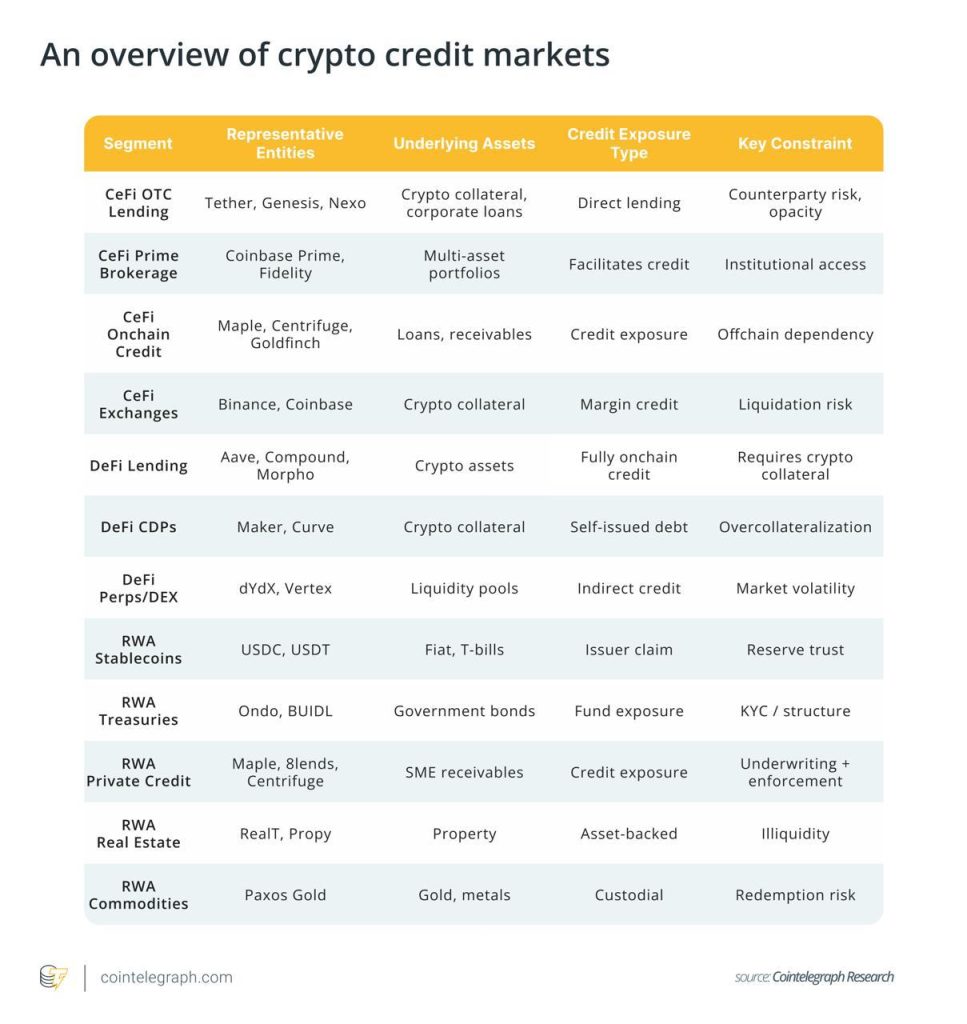
Understanding the Foundations of Crypto Credit: A Deep Dive into CeFi, DeFi, and RWA
Background and Context
In the rapidly evolving landscape of cryptocurrency, the mechanisms of credit and lending are diversifying. Centralized finance (CeFi), decentralized finance (DeFi), and real-world asset (RWA) private credit models each have distinct characteristics that dictate how credit is created and managed. The rise of various lending platforms and protocols has introduced a complexity that requires careful analysis to understand the underlying structures that govern these financial products.
CeFi platforms, like traditional banks, concentrate counterparty exposure. This means that the risks are tied to a central entity that manages the funds and credit processes. On the other hand, DeFi relies heavily on on-chain collateral, wherein users deposit assets into smart contracts that automatically enforce liquidation rules. RWA credit, however, still leans on off-chain underwriting processes and legal claims, which can create an additional layer of complexity and risk.
Key Data and Metrics
According to recent reports by Cointelegraph Research in collaboration with @eightlends, the structure of credit exposure across the crypto market is intricate. In terms of market share, CeFi lending platforms currently hold approximately 60% of the market, while DeFi represents about 30% and RWA credit occupies the remaining 10%. These figures highlight the dominance of CeFi but also point to the growing influence of DeFi and RWA in the broader ecosystem.
Furthermore, the total value locked (TVL) in DeFi protocols has seen significant fluctuations, with recent data indicating a TVL of around $45 billion, down from highs of over $100 billion in 2021. This decline raises questions about the sustainability of DeFi lending as a viable alternative to traditional finance.
Market Analysis
The crypto credit market is not just a technical exercise; it has real implications for traders and investors. For instance, the reliance on collateral in DeFi presents both opportunities and risks. With on-chain collateralization, investors can maintain liquidity while accessing credit. However, this system also exposes participants to volatility. A sudden drop in asset prices can trigger liquidations, leading to significant losses.
Moreover, the integration of RWAs into the crypto space introduces a unique set of challenges and opportunities. Investors are increasingly looking for ways to bridge traditional assets with blockchain technology. The potential for tokenized real estate, commodities, and other tangible assets could revolutionize the credit landscape, allowing for greater access and efficiency.
Expert Perspective
Industry experts suggest that understanding the nuances of each credit model is crucial for making informed investment decisions. For example, Tom Lee, a prominent figure in the crypto space, emphasizes the importance of assessing the fundamentals behind different lending mechanisms. As discussed in our recent analysis of JPMorgan’s strategies, institutional involvement in crypto credit markets can also signal shifts in market dynamics.
Additionally, the recent increase in regulatory scrutiny over DeFi platforms could reshape the landscape significantly. As outlined in our report on CFTC chair Michael Selig’s views, regulators are increasingly focused on ensuring consumer protection and market integrity, which could influence how credit products are structured and offered.
Risks and Opportunities
While the potential for growth in crypto credit markets is substantial, so too are the risks. The reliance on blockchain technology for collateral management introduces new vulnerabilities. Smart contract bugs or vulnerabilities can lead to substantial losses, as seen in previous exploits that have rocked the DeFi sector. Furthermore, the lack of a centralized authority in DeFi can complicate recourse options for investors in the event of a loss.
Conversely, the opportunity to leverage RWAs presents a significant advantage for the crypto credit landscape. As more investors seek stable and reliable credit solutions, the integration of traditional asset classes could attract a broader audience to the crypto space. For instance, tokenized Treasuries could offer a stable yield while providing liquidity through blockchain technology.
Future Outlook
Looking ahead, the trajectory of crypto credit markets will likely depend on several key factors, including regulatory developments, market adoption of DeFi solutions, and the integration of RWAs. As institutions continue to explore the potential of blockchain, we may see an increased push towards creating hybrid models that combine the strengths of CeFi, DeFi, and RWA.
Moreover, the ongoing conversations about sustainability and responsible lending practices will shape the future of credit in the crypto space. Investors should stay informed and consider the implications of these developments on their strategies.
Conclusion
The crypto credit landscape is multifaceted, presenting both challenges and opportunities for investors. As we dissect the various models—CeFi, DeFi, and RWA—it’s imperative to understand the underlying mechanisms that govern these credit solutions. The ongoing evolution of regulatory frameworks, market dynamics, and technological advancements will play a critical role in shaping the future of crypto credit. Those looking to navigate this space should remain vigilant and informed, leveraging the insights from research and expert perspectives to make sound investment decisions.
For more insights on the evolving crypto landscape, explore our analysis of Ethereum accumulation trends and how they relate to credit markets.